Publications

A Legacy of Strategic Research

Strategic Foresight Group (SFG) has built a distinguished record of research through its publications. These studies explore the long-term forces shaping conflict, cooperation, and global change. At the same time, they examine emerging challenges and identify opportunities for constructive action. Our first report, The Future of Pakistan (2002), launched a programme to anticipate future risks and develop policy options. In doing so, it established the foundation for SFG’s distinctive approach to strategic analysis. Since then, SFG has published extensively across a wide range of global issues. Moreover, every publication combines forward-looking research with practical recommendations for policymakers and other stakeholders. As a result, this commitment has remained central to our work.

Addressing Global Challenges

Over more than two decades, our research has addressed both regional and international challenges. For example, we have explored the future of South Asia and analysed the costs of conflict in India, Pakistan, Sri Lanka, and the Middle East. Through these studies, we have highlighted the human, economic, and political consequences of instability. At the same time, we have identified pathways towards greater cooperation and lasting peace. In addition, our Blue Peace publications have examined water cooperation in the Middle East, the Nile Basin, and the Indian subcontinent. Importantly, they demonstrate how shared water resources can become a foundation for trust, dialogue, and regional stability. More recently, our research has expanded to address the opportunities and risks created by new technologies. Specifically, this includes studies on artificial intelligence in nuclear command systems and the broader implications of advanced AI for global security.

A Resource for the Future

Together, these publications reflect the evolution of SFG’s research and its response to a changing world. Presented chronologically, they offer a clear record of our intellectual journey and policy engagement. Furthermore, they provide a valuable resource for policymakers, researchers, journalists, students, and anyone interested in global affairs. Ultimately, they demonstrate how ideas have developed over time while responding to emerging global priorities. Above all, they reflect SFG’s enduring commitment to evidence-based analysis that supports informed decisions on the world’s most complex challenges.
The Cost of Conflict in the Middle East, 2009

In this report Strategic Foresight Group makes a detailed assessment of the economic, social, military, environmental, political and diplomatic costs of conflict in the Middle East.
To view a short video on the report see:
http://www.youtube.com/watch?v=k_chBTlzoDU
To view a short video of HRH Prince Hassan bin Talal of Jordan speaking on the cost of conflict at the International Conference on "Water Cooperation for a Secure World--Focus on the Middle East" see:
http://www.youtube.com/watch?v=TUj2hnsxPgk&feature=youtu.be
USD $40 INR Rs.1,800 (Plus Shipping Charges)
Inclusive Semi-Permanent Conference for the Middle East, 2008

Strategic Foresight Group presents its latest report on an innovative mechanism to find sustainable solution to conflicts in the Middle East. Foreword by The Rt. Hon. Lord Alderdice, former Speaker of the Northern Ireland Assembly.
USD $20 INR Rs.635

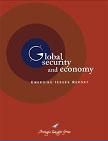
Global Security and Economy: Emerging Issues, 2008

Strategic Foresight Group presents its report on issues that will have greatest impact on the 21st century. Surprises are in store. Will the United States and Iran enter into strategic cooperation? Will the technological base of the world economy change in a fundamental way by 2020? Will extremism replace terrorism as the greatest risk to global security? Will a new global philosophical discourse appear on the world stage? The report debates these and other critical issues.
US$ 20 INR Rs.625

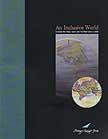
An Inclusive World : In which the West, Islam and the Rest have a stake, 2007

The greatest challenge of the 21st century is for us to come together to discover our common identity, reaffirm and restore core human values, to appreciate our common history and to create a shared future. In order to shape an inclusive world in which the West, Islam and the Rest have a stake, it is necessary to shift from the centuries old model based on the doctrine of force, to a model based on the collaborative harnessing of the spirit of humanity. The use of force in the name of religion, ideology, race or other belief systems underpins the pursuit of power. It is in the essential nature of states to seek and expand power. It is in the essential nature of human beings to explore the principles of co-existence. We need to achieve a basic balance between power and principles. An Inclusive World: In which the West, Islam and the Rest have a stake, is an essay deriving insight from a study of incidences of terror in all parts of the world and reviews why terrorism takes places in all parts of the world, especially Latin America, Africa, Asia and the Middle East. It examines why extremism may replace terrorism as the greatest threat to world security and engulf politics of the United States and Europe. It exposes contradictions in self serving Eastern and Western discourse. It also envisages the framework for a sustainable global security architecture, where co-existence triumphs over discord and hope wins over fear. It proposes building blocs of an alternative future that are politically feasible as well as presents action plans for a series of initiatives for leaders, experts, and civilians to collaborate on.
This publication is also available in Arabic. The Institute for Peace Studies affiliated with the Suzanne Mubarak Women's International Peace Movement and hosted by the Bibliotheca Alexandrina issued an Arabic version of An Inclusive World.
USD 15/INR 625
Cost of Conflict in Sri Lanka, 2006

Cost of Conflict in Sri Lanka report uses creative analytical tools developed by the Strategic Foresight Group to assess the impact of conflict on different sections of Sri Lankan economy and society as well as its comprehensive impact on the future of the nation. The report builds on and studies not only the direct costs of conflict such as human deaths, increased military expenditure, or economic losses in the form of lowered foreign direct investment or losses in tourism. But, it also studies the effects of a two decade plus conflict in promoting societal corrosion and segregation, political polarization and extremism and regional disparity. The report also provides 2005-2010 scenarios for Sri Lanka under the differing situations of peace, ceasefire and conflict.
US$ 30 INR Rs.625

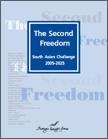
Second Freedom South Asian Challenge 2005-2025, 2005

The objective of this report is to examine the challenges facing South Asia in the next 20 years, at a time when the region is likely to be influenced by global developments as well internal dynamics. The report studies the various economic, social, political and security sectors in India, Pakistan, Sri Lanka, Bangladesh and Nepal, to come up with future projections for each of these individual nations as well as the common reality for the region. The report demonstrates the factors likely to affect the region from 2005-2025 and the impact it is likely to have on the region. It states that South Asia will encounter a world where the basic concepts of sovereignty of state, separation of religion and polity, and the unity of super-force and super-power will be challenged, and the world will see a shift from the West to the East. It also studies the impact of changes in geopolitics in the neighboring region, the impact of wildcards such as path breaking technological innovation and development or the use of a nuclear weapon by a state or non state actor.
US$ 25 or INR Rs.625

Conference Reports
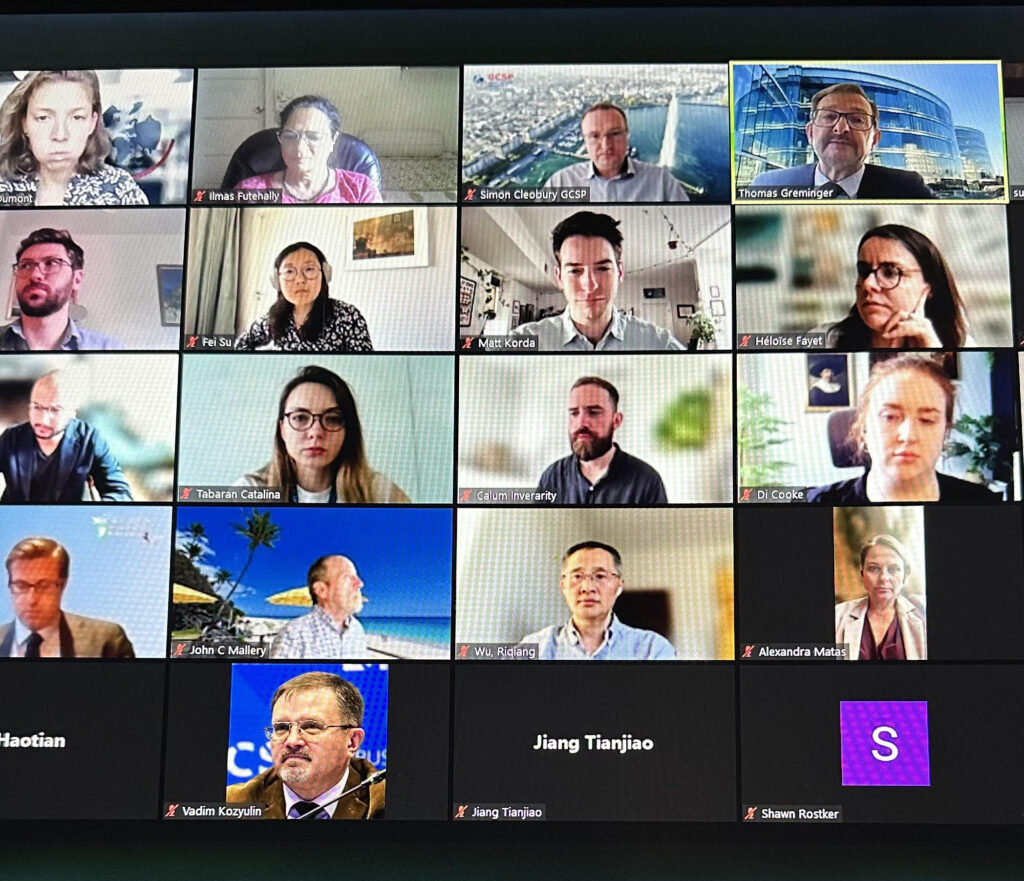
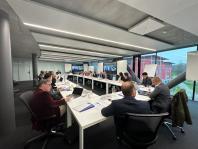
P5 Experts Roundtable- Online on AI- Nuclear Nexus

P5 Experts Roundtable on Nuclear Risk Reduction