Publications

A Legacy of Strategic Research

Strategic Foresight Group (SFG) has built a distinguished record of research through its publications. These studies explore the long-term forces shaping conflict, cooperation, and global change. At the same time, they examine emerging challenges and identify opportunities for constructive action. Our first report, The Future of Pakistan (2002), launched a programme to anticipate future risks and develop policy options. In doing so, it established the foundation for SFG’s distinctive approach to strategic analysis. Since then, SFG has published extensively across a wide range of global issues. Moreover, every publication combines forward-looking research with practical recommendations for policymakers and other stakeholders. As a result, this commitment has remained central to our work.

Addressing Global Challenges

Over more than two decades, our research has addressed both regional and international challenges. For example, we have explored the future of South Asia and analysed the costs of conflict in India, Pakistan, Sri Lanka, and the Middle East. Through these studies, we have highlighted the human, economic, and political consequences of instability. At the same time, we have identified pathways towards greater cooperation and lasting peace. In addition, our Blue Peace publications have examined water cooperation in the Middle East, the Nile Basin, and the Indian subcontinent. Importantly, they demonstrate how shared water resources can become a foundation for trust, dialogue, and regional stability. More recently, our research has expanded to address the opportunities and risks created by new technologies. Specifically, this includes studies on artificial intelligence in nuclear command systems and the broader implications of advanced AI for global security.

A Resource for the Future

Together, these publications reflect the evolution of SFG’s research and its response to a changing world. Presented chronologically, they offer a clear record of our intellectual journey and policy engagement. Furthermore, they provide a valuable resource for policymakers, researchers, journalists, students, and anyone interested in global affairs. Ultimately, they demonstrate how ideas have developed over time while responding to emerging global priorities. Above all, they reflect SFG’s enduring commitment to evidence-based analysis that supports informed decisions on the world’s most complex challenges.
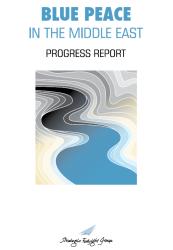
Blue Peace in the Middle East: Progress Report, 2014

Since water is at the core of life, cooperation on transboundary water resources has the potential to transform relations between countries and establish peace. Strategic Foresight Group's Blue Peace approach holds true to this principle with its belief that water can be transformed from an instrument of conflict to one of cooperation and peace through a series of concrete actions.
In 2011, SFG's report on Blue Peace in the Middle East was published. From 2011 to 2014, numerous developments have taken place that have advanced the ten recommendations made in that report towards becoming a reality. The aim of the Blue Peace in the Middle East: Progress Report is to chart this journey and outline the lessons learnt in the process.
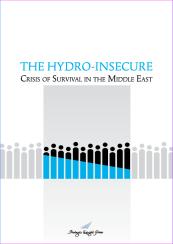
The Hydro-Insecure – Crisis of Survival in the Middle East, 2014

The Government authorities mandated to address water problems, as well as international organisations engaged with the Middle East would benefit tremendously if they have a decision support tool that maps and analyses the plight of the most vulnerable population. This report by Strategic Foresight Group, takes the water cooperation discourse to the level where it is most needed. It identifies 40 million hydro-insecure people from 30 governorates from Iraq, Jordan, Lebanon, Syria and Turkey. About a third of these governorates are in border areas, threatening to spread the problems of hydro-insecure people in one country to other countries across boundaries. The report explains how water vulnerability is closely linked to not only climate and drought conditions, but also to poverty, violence and refugees.

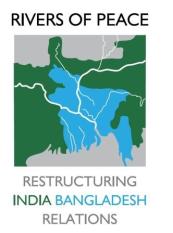
Rivers of Peace – Restructuring India Bangladesh Relations, 2013

This report is SFG's contribution to the India Bangladesh discourse on water relations drawn from our deep experience in water diplomacy around the world and particularly in Asia, the Middle East and Africa. In addition, our experience and base in South Asia has helped us to have incisive understanding of the local realities in the two countries. Thus, this report is a result of our worldwide exposure to hydro diplomacy and insight in regional realities. We particularly benefitted from a roundtable held on 1-2 July 2013 in Mumbai attended by representatives of ruling establishments and opposition parties as well as eminent experts from India and Bangladesh.
INR 625, USD 15

Interactive Map – Water Cooperation for a Secure World, 2013

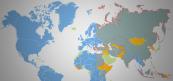
This interactive map shows the water cooperation quotient between countries, as published in Strategic Foresight Group new report Water Cooperation for a Secure World - Focus on the Middle East. The water cooperation quotient is a calculation of the degree of cooperation between countries sharing transboundary water resources - a higher number indicating a greater level of cooperation in trans-boundary water. The map also demarcates countries that face the risk of war. Thus the map shows that countries with a high water cooperation quotient do not go to war for any reason whatsoever. The map clearly indicates that East Africa, Middle East, and Asia fall at the bottom of the quotient scale and face a higher risk of war.
Out of 148 countries sharing water resources, 37 do not engage in active water cooperation. These 37 countries face the risk of war and are home to more people on the earth than others. https://strategicforesight.com/water-cooperation-map/
Water Cooperation for a Secure World -Focus on the Middle East, 2013

Strategic Foresight Group's new report Water Cooperation for a Secure World - Focus on the Middle East details that water cooperation between countries sharing trans-boundary water resources is directly correlated with security of nations involved in such cooperation and peace in the continent or subcontinent they belong to. Conversely, absence of active water cooperation is directly correlated with risk of war between countries sharing trans-boundary water resources.Out of 148 countries sharing water resources, 37 do not engage in active water cooperation. These 37 countries face the risk of war and are home to more people on the earth than others.
This report presents a detailed analysis of ten successful regional water cooperation arrangements, including details of their treaties, structures, processes and operational realities. Drawing on experiences from around the world, the report presents the possibility for the construction of a river basin organisation or other forms of regional water cooperation arrangements.
INR 1200
Blue Peace for the Nile, 2013

The Blue Peace for the Nile report advocates collaborative, comprehensive and sustainable solutions to transboundary water issues. It promotes engagement of mainstream decision makers and national leaders to address the water issue, going beyond conventional approaches. It also explores how water can be used as an instrument for peace. The countries of the Nile Basin have made commendable progress in regional cooperation under the auspices of the Nile Basin Initiative. The report is a result of a comprehensive international effort, primarily with input from nine of the Nile Basin countries (Burundi, Rwanda, Kenya, Uganda, Tanzania, Sudan, South Sudan, Ethiopia and Egypt). It examines trends and discontinuities for the next 40-50 years, and gives an insight into the future that will help us to prepare policy options.

Conference Reports

P5 Experts Roundtable- Online on AI- Nuclear Nexus

P5 Experts Roundtable on Nuclear Risk Reduction