Publications
A Legacy of Strategic Research
Strategic Foresight Group (SFG) has built a distinguished record of research through its publications. These studies explore the long-term forces shaping conflict, cooperation, and global change. At the same time, they examine emerging challenges and identify opportunities for constructive action. Our first report, The Future of Pakistan (2002), launched a programme to anticipate future risks and develop policy options. In doing so, it established the foundation for SFG’s distinctive approach to strategic analysis. Since then, SFG has published extensively across a wide range of global issues. Moreover, every publication combines forward-looking research with practical recommendations for policymakers and other stakeholders. As a result, this commitment has remained central to our work.
Addressing Global Challenges
Over more than two decades, our research has addressed both regional and international challenges. For example, we have explored the future of South Asia and analysed the costs of conflict in India, Pakistan, Sri Lanka, and the Middle East. Through these studies, we have highlighted the human, economic, and political consequences of instability. At the same time, we have identified pathways towards greater cooperation and lasting peace. In addition, our Blue Peace publications have examined water cooperation in the Middle East, the Nile Basin, and the Indian subcontinent. Importantly, they demonstrate how shared water resources can become a foundation for trust, dialogue, and regional stability. More recently, our research has expanded to address the opportunities and risks created by new technologies. Specifically, this includes studies on artificial intelligence in nuclear command systems and the broader implications of advanced AI for global security.
A Resource for the Future
Together, these publications reflect the evolution of SFG’s research and its response to a changing world. Presented chronologically, they offer a clear record of our intellectual journey and policy engagement. Furthermore, they provide a valuable resource for policymakers, researchers, journalists, students, and anyone interested in global affairs. Ultimately, they demonstrate how ideas have developed over time while responding to emerging global priorities. Above all, they reflect SFG’s enduring commitment to evidence-based analysis that supports informed decisions on the world’s most complex challenges.
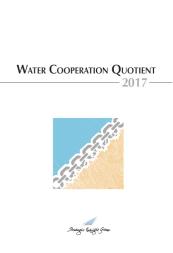
“The Water Cooperation Quotient is an effective decision-making tool for water cooperation and a badly needed barometer for assessing risks of war; one that the InterAction Council urges be employed around the world to promote peace, ensure security and improve human and planetary health through cooperation over shared waters, now and in the future.”
- Bertie Ahern, former Prime Minister of Ireland, and Olusegun Obasanjo, former President of Nigeria, co-chairs of the InterAction Council, stated in their Foreword to WCQ 2017.

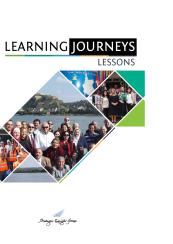
The learning journeys were organised to Nile River Basin in Eastern Africa, Senegal River Basin in Western Africa, Mekong River Basin in East Asia and Rhine River Basin in Western Europe.
SFG had published a report of each learning journey at its conclusion. This publication, in a nutshell, summarises all the important lessons and observations that countries could adapt from those journeys.
These facts should convince governments, civil society, international organisations in the Middle East and those outside concerned about the region to reflect on the great tragedy that we invited on ourselves exactly at a time when the region was moving towards cooperation. It is still possible to reverse the direction of events in the Middle East and move back to the spirit of 2010. It is indeed essential to build on what was achieved in 2010 to foster cooperation in water, food and environment so that the region can finally begin its journey from deep crisis to stability and from stability to an era of peace and prosperity.
‘Big Questions of Our Time: The World Speaks’ brings together 89 thought leaders in 44 countries in an effort to define our emerging future. They reflect on the dynamics between power and principles, risks of the next global war, consequences of growing inequity, future of human dignity, among other issues that challenge the present architecture of global governance.
This unique collection of ideas and perspectives also includes SFG research and analysis projecting political power play in 2050 driven by the scientific and technological prowess of countries.
Conference Reports