Publications

A Legacy of Strategic Research

Strategic Foresight Group (SFG) has built a distinguished record of research through its publications. These studies explore the long-term forces shaping conflict, cooperation, and global change. At the same time, they examine emerging challenges and identify opportunities for constructive action. Our first report, The Future of Pakistan (2002), launched a programme to anticipate future risks and develop policy options. In doing so, it established the foundation for SFG’s distinctive approach to strategic analysis. Since then, SFG has published extensively across a wide range of global issues. Moreover, every publication combines forward-looking research with practical recommendations for policymakers and other stakeholders. As a result, this commitment has remained central to our work.

Addressing Global Challenges

Over more than two decades, our research has addressed both regional and international challenges. For example, we have explored the future of South Asia and analysed the costs of conflict in India, Pakistan, Sri Lanka, and the Middle East. Through these studies, we have highlighted the human, economic, and political consequences of instability. At the same time, we have identified pathways towards greater cooperation and lasting peace. In addition, our Blue Peace publications have examined water cooperation in the Middle East, the Nile Basin, and the Indian subcontinent. Importantly, they demonstrate how shared water resources can become a foundation for trust, dialogue, and regional stability. More recently, our research has expanded to address the opportunities and risks created by new technologies. Specifically, this includes studies on artificial intelligence in nuclear command systems and the broader implications of advanced AI for global security.

A Resource for the Future

Together, these publications reflect the evolution of SFG’s research and its response to a changing world. Presented chronologically, they offer a clear record of our intellectual journey and policy engagement. Furthermore, they provide a valuable resource for policymakers, researchers, journalists, students, and anyone interested in global affairs. Ultimately, they demonstrate how ideas have developed over time while responding to emerging global priorities. Above all, they reflect SFG’s enduring commitment to evidence-based analysis that supports informed decisions on the world’s most complex challenges.
Alternative Dispute Resolution

Riparian countries cooperating on water management are bound to face new issues that could potentially lead to conflict. It is therefore important to have built in mechanisms in their water sharing agreements that could lead to a peaceful resolution of issues as and when they arise. River Basin Oraganizations around the world have found a different, but effective way of dealing with resolution of disputes between them. This issue of the Blue Peace Bulletin examines some of them.
Download:

ADR

Blue Peace Decade Conference Report

The Blue Peace Movement completed 10 years in February 2020. It was launched in February 2020, with initial emphasis on the Middle East, and later on expanded to cover different regions and global dimensions. To celebrate this, Strategic Foresight Group, and Centre for the Resolution of Intractable Conflict at Oxford University, along with the Swiss Agency for Development and Cooperation co-hosted an international conference in London on 17-18 February in London. The report not only reflects on lessons from the last decade but also provides ideas for the next one.

Water and Violence: The Indus

Rhetoric over the Indus River has been a source of tension between India and Pakistan over the last many years. While the Indus Water Treaty has prevented major conflict over the water, simmering tensions remain. This issue of the Blue Peace Bulletin examines the current situation and makes recommendations on how to build cooperation.
Download:

The Indus

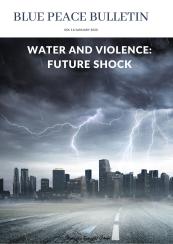
Water and Violence: Future Shock

The first Blue Peace Bulletin of 2020 presents scenarios for water security beyond 2030. Strategic Foresight Group was established primarily as a scenario planning organization several years ago. In this bulletin we apply our scenario planning expertise to the future of water cooperation and security. We examine both potentially positive and destructive trajectories. Scenarios are not just about mapping trends, Scenarios are more about identifying the discontinuities. In this bulletin, we signal major discontinuities including some wild cards. So tighten your seat belt, hold your breath and witness the future shock.
Download:

Future Shock

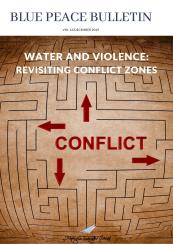
Revisiting Conflict Zones

The Global High Level Panel on Water and Peace called for protection of water resources and infrastructure from violent conflicts and terrorist acts. In this volume, we revist some of the conflict zones that we have looked at in earlier bulletins.

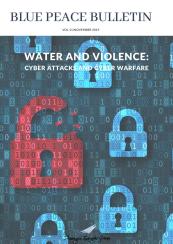
Water and Violence: Cyber Attacks and Cyber Warfare

The Global High Level Panel on Water and Peace called for protection of water resources and infrastructure from violent conflicts and terrorist acts. In this volume, we examine the emerging threat of cyber attacks on critical infrastructure.

Conference Reports

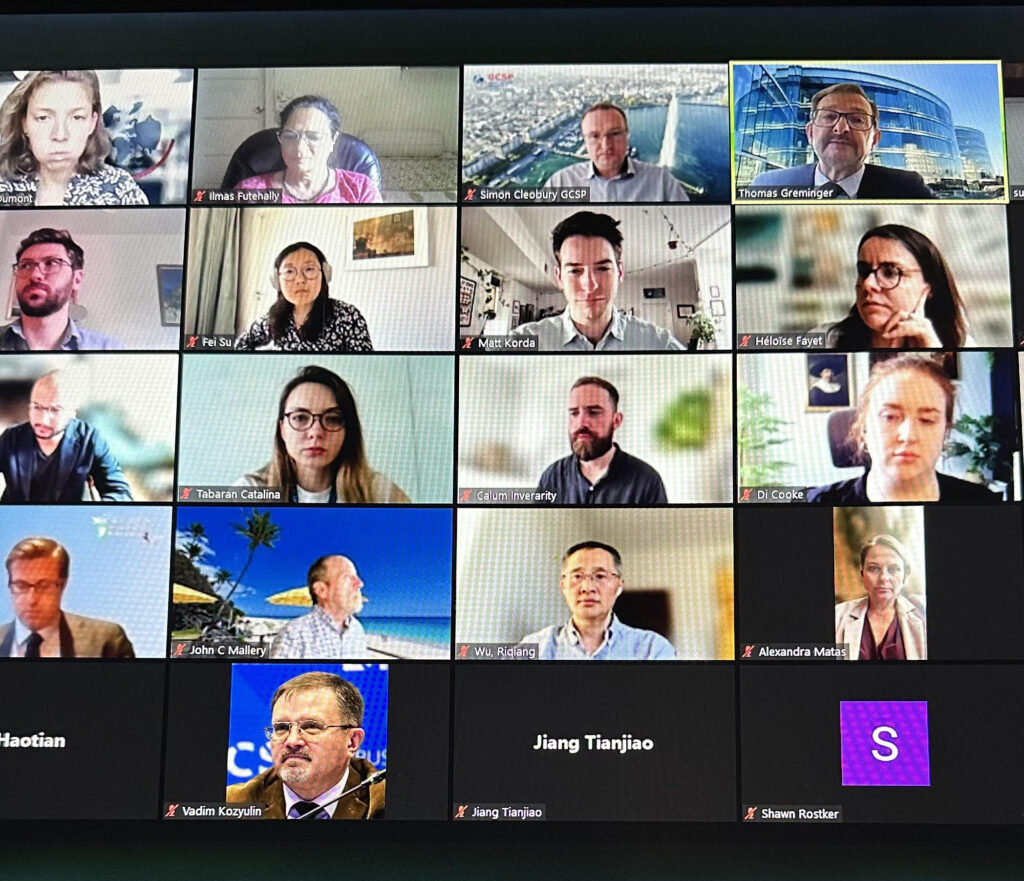
P5 Experts Roundtable- Online on AI- Nuclear Nexus

P5 Experts Roundtable on Nuclear Risk Reduction