Publications

A Legacy of Strategic Research

Strategic Foresight Group (SFG) has built a distinguished record of research through its publications. These studies explore the long-term forces shaping conflict, cooperation, and global change. At the same time, they examine emerging challenges and identify opportunities for constructive action. Our first report, The Future of Pakistan (2002), launched a programme to anticipate future risks and develop policy options. In doing so, it established the foundation for SFG’s distinctive approach to strategic analysis. Since then, SFG has published extensively across a wide range of global issues. Moreover, every publication combines forward-looking research with practical recommendations for policymakers and other stakeholders. As a result, this commitment has remained central to our work.

Addressing Global Challenges

Over more than two decades, our research has addressed both regional and international challenges. For example, we have explored the future of South Asia and analysed the costs of conflict in India, Pakistan, Sri Lanka, and the Middle East. Through these studies, we have highlighted the human, economic, and political consequences of instability. At the same time, we have identified pathways towards greater cooperation and lasting peace. In addition, our Blue Peace publications have examined water cooperation in the Middle East, the Nile Basin, and the Indian subcontinent. Importantly, they demonstrate how shared water resources can become a foundation for trust, dialogue, and regional stability. More recently, our research has expanded to address the opportunities and risks created by new technologies. Specifically, this includes studies on artificial intelligence in nuclear command systems and the broader implications of advanced AI for global security.

A Resource for the Future

Together, these publications reflect the evolution of SFG’s research and its response to a changing world. Presented chronologically, they offer a clear record of our intellectual journey and policy engagement. Furthermore, they provide a valuable resource for policymakers, researchers, journalists, students, and anyone interested in global affairs. Ultimately, they demonstrate how ideas have developed over time while responding to emerging global priorities. Above all, they reflect SFG’s enduring commitment to evidence-based analysis that supports informed decisions on the world’s most complex challenges.

The Final Settlement: Restructuring India-Pakistan Relations, 2005

The International Herald Tribune calls it Kashmir's real story! The Final Settlement: Restructuring India-Pakistan Relations, is an honest, though biting analysis of the psychology and ground realities of the two countries based on the comprehensive understanding of developments taking place over the last three decades. The conflict between India and Pakistan currently extends to the entire South Asian region, from Afghanistan to Bangladesh. Of this wide spread conflict, the Jammu & Kashmir component is known internationally. The Jammu & Kashmir issue itself has several dimensions. To India, it is a test of secularism. To Pakistan, it is a source of strategically important rivers. To the people of Jammu & Kashmir, it is a matter of living in peace with dignity. Therefore, in all its complexity, the search of a final settlement between the two must be based on an analysis of the three essential elements in the bilateral relationship fire, water and earth. In this report, SFG states that a final settlement between the two will have to be based on realistic analysis of the water situation in the entire Indus River Basin an element, hitherto unknown.
US$ 22 INR Rs.250

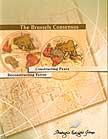
Brussels Consensus, 2004

The Brussels Consensus was the document on the principles and policies for a safer world that was adopted by the participants of the Second International Roundtable at the European Parliament. The Brussels Consensus is a set of innovative policy measures, including principles of sustainable global security, zero tolerance for acts of terror, a strategy of disaggregation while dealing with groups engaging in terror, and international cooperation for the transformation of societies at risk

Pakistan’s Provinces, 2004

Pakistan's biggest challenge will be in the context of relations between the federal government and the provinces. The future of Pakistan's provinces will have bearing on geo-politics of the entire region. Any tension between NWFP and the rest of Pakistan will impact Afghanistan. Problems in Balochistan will affect Afghanistan and Iran. Friction between Punjab and Sindh can cause, in the extreme case, massive refugee influx into India. Thus, the future of Pakistan's provinces will subtly govern the future of extended South Asia. An analysis of Pakistan's provinces, at this juncture, is thus pertinent and Pakistan's Provinces does just that. The study begins with a macro overview of Pakistan's economy followed by inter-provincial comparisons that are based on our understanding of Pakistan's economy and society. The subsequent chapters deal with each province separately. Finally, our perspectives are synthesized in an effort to outline future scenarios for Pakistan.
US$ 15 INR Rs.295

Cost of Conflict between India and Pakistan, 2004

For the first time in the 57 years of hostility between India and Pakistan a comprehensive assessment of the cost of conflict between the two countries has been made by Strategic Foresight Group in this report. The past assessment of the cost of conflict has been limited to military expenditure and opportunity cost of trade. The Cost of Conflict between India and Pakistan, takes into account comprehensive economic costs, socio-political damage, military costs, diplomatic costs, human costs and even the implications of the nuking of Mumbai and Karachi. The report has also estimated Gross Terror-economy Product (GTP) of Kashmir and Pakistan and likely financial and human costs that the two countries will incur in the next five years if they do not consolidate the gains made at the SAARC Summit at Islamabad in January 2004. It is a rare document, presented in graphical form for easy and quick comprehension by decision makers.

Shifting Sands: Instability in Undefined Asia, 2003

Launched on the eve of the US attack on Iraq, Shifting Sands: Instability in Undefined Asia addresses tensions between the impact of events and underlying structural realities in Undefined Asia consisting of Pakistan, Afghanistan, Iran, Iraq and Saudi Arabia. Though undefined as it is outside any established institutional arrangements or group of nations, it is interlinked by oil, terrorism, and strategic concerns of big powers. As the US military involvement in Afghanistan and Iraq creates a spell of uncertainty many questions are bound to come to surface. Will the US actions in Undefined Asia primarily determine the future of the region? Or are there internal dynamics, which render US actions superficial? Many of the predictions made in Shifting Sands have proved to be correct within a few months of its publication. The report had predicted the withdrawal of American forces from Saudi Arabia, armed skirmishes between Afghanistan and Pakistan, rise of terrorism in Undefined Asia following the US victory in Baghdad. Many other predictions await the test of time. In order to understand what will happen in the world's largest hot spot in the first decade of the twenty first century, the report is a must read for everyone.
US$ 60 INR Rs.1350

Rethinking India’s Future: Prosperity of the Periphery, 2002

The report outlines India's development model that has created three economies- business class, bike and bullock cart economy. Will this division of the Indian economy cause a division of the Indian mind, or will unity of the Indian mind lead to the integration and transformation of the Indian economy? What does the future hold for India? Three scenarios have been put forward: Breakdown, Break-up and Breakthrough. What will be the appropriate strategies to make the best scenario possible? Will India manage to place herself in a virtuous cycle of prosperity and peace? This report provides insightful and innovate answers to these questions. It is essential reading for anyone who is interested in India's future.
US$ 25 INR Rs.625

Conference Reports

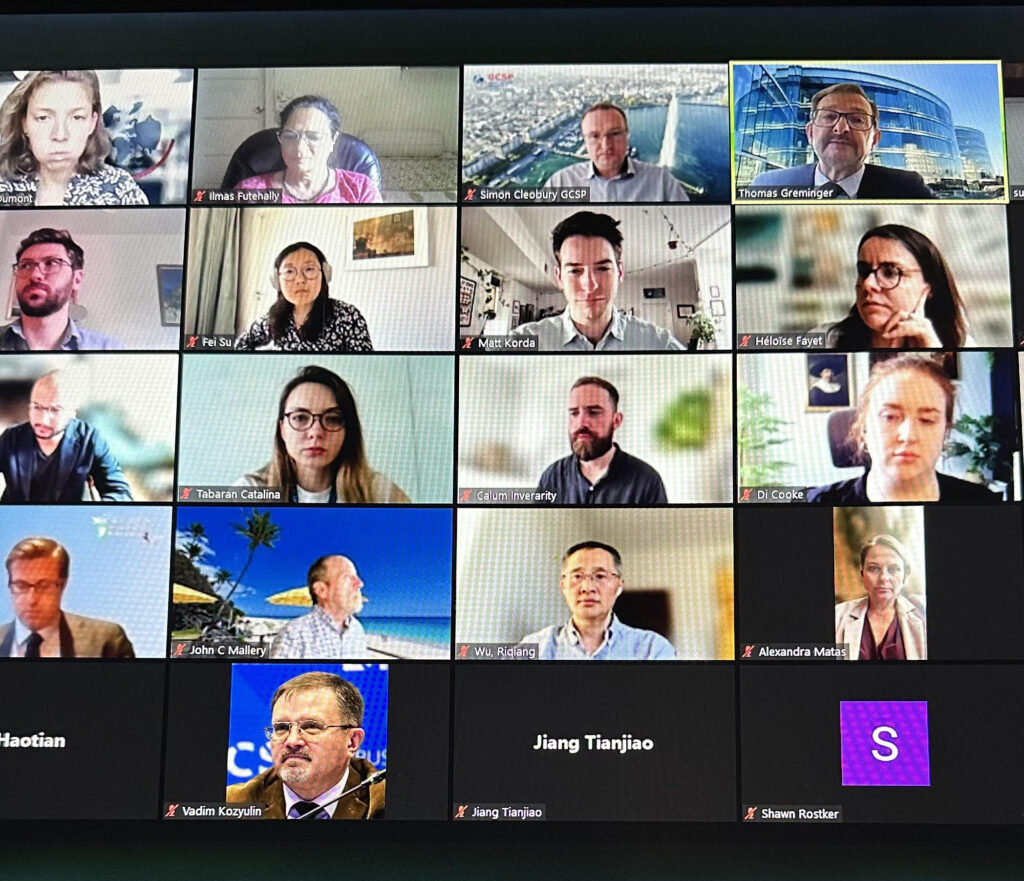
P5 Experts Roundtable- Online on AI- Nuclear Nexus

P5 Experts Roundtable on Nuclear Risk Reduction