
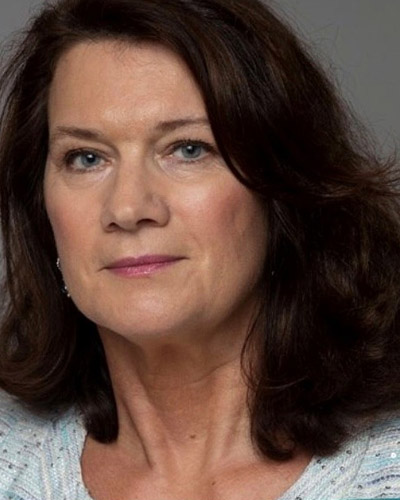
Ann Linde
Former Minister of Foreign Affairs of Sweden
Nearly a century after Rabindranath Tagore warned of the “obscuration of man,” the real tragedy today is not simply conflict or insecurity, but a deeper erosion of our capacity to recognize one another’s humanity.
In a world more connected than ever, mistrust has become the default language between nations and peoples. Respect is often conditional, dignity unevenly granted, and cooperation treated as a tactic rather than a shared responsibility. We face global challenges—climate change, inequality, technological disruption—that no country can solve alone, yet collective action is repeatedly undermined by suspicion and short-term interests.
The tragedy is not that solutions are beyond reach, but that the will to pursue them together is weakening. When dialogue gives way to division, and partnership yields to rivalry, humanity diminishes itself. To obscure one another in this way is to obscure ourselves.
The real tragedy, then, is not merely what we fail to achieve, but what we fail to be—together.
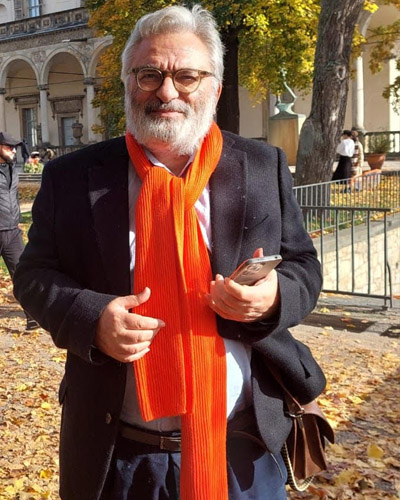
Vasilis Politis
Professor of Philosophy and Director of The Plato Centre, Trinity College Dublin
The answer l want to articulate is rooted in something l have been working on for some time: the idea of evil and why it is so important. I agree with Rabindranath Tagore when he says that “The real tragedy lies in the obscuration of man himself”. This is what evil is, a darkening of ourselves, individually and politically.
For a long time now the idea of evil has had a bad press in the hands of philosophers, scientists, politicians, the media and trend-setting people generally. It is thought to have no place in secular society; that science does not need it; that people who believe in evil must be educated not to; that we should dispense with the word ‘evil’. This consensus is relatively new, for the idea of evil is central in Plato, Neoplatonists, Christian thinkers and those of the Abrahamic religions; and they, and others, have shaped millennia-long intellectual and moral traditions. To want to dispense with the idea of evil is to want to consign such traditions to oblivion.
I think l know why the idea of evil is on the way out; it is because those who reject it believe that the difference in good and bad between one human being and another, or between one state of the world and another, is only a difference of degree. All there is is more or less good people and more or less bad people and states of affairs. The idea of an evil person, on the contrary, is the idea of a person who is substantially different from a merely bad person, a person lacking in goodness. An evil person is not just someone who is less good and lacking in goodness; it a person who is opposite to good.
This means that an evil person is facing the wrong way, in the opposite direction of good. He is lost. If he is to have a chance of recovering, he will have to turn around and reorientate himself. This is a radical task, in oneself and in relation to the world around one.
Now, if we reject the idea of evil, we will deny that we can lose our way and be altogether without a compass. Even if recognize that things are pretty bad, in the world or ourselves, without the idea of evil we will confident that all we need is make them gradually better and everything will be fine. This confidence is, I believe, over-confidence and hubris.
But what if there is evil in us and in the world we help shape—even if it only inclines us to being evil and has not made us so? Then the belief in gradual progress, however bad things might be, is illusion and self-deception. Dispensing with the idea of evil obstructs us from even trying to recover. This is a real tragedy.
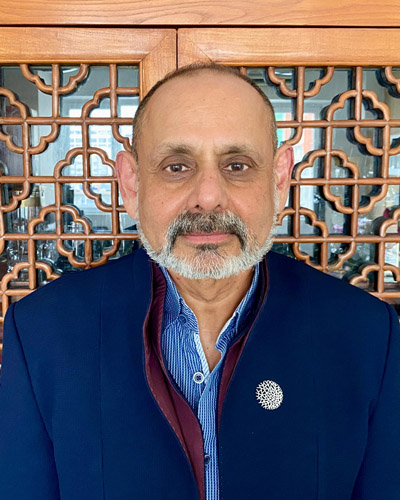
Zoher Abdoolcarim
Asia Editor 2008-2017, TIME Magazine
Our planet is facing two existential crises. One is physical, the other moral, ethical and spiritual, rolled together.
Earth is beset by climate change. We are facing an environmental apocalypse. We all are bound by this danger. But despite the mounting evidence of ever-harmful consequences worldwide, irreparably damaging lives and livelihoods, those with power are unwilling to forge a sufficiently meaningful collective response.
Instead, violence, cruelty and hypocrisy are the hallmarks of our age. By now, this 21st century with such once unimaginable advances, we should have evolved into beings who have buried or at least controlled their basest instincts, who recognise and acknowledge and address the many challenges we have in common. Not so—we are mired in ancient divisions and hatreds stirred and aggravated by futuristic technologies.These are the real tragedies. Can we circumvent them? I hope, but without conviction, nor faith. I dare not believe that humanity will, in the end, prove human.
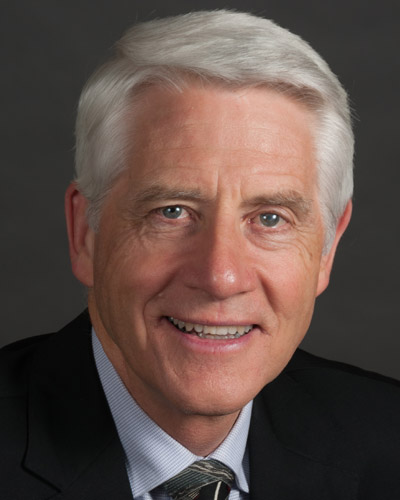
Kennedy Graham
Founder of New Zealand Centre for Global Studies, Former Secretary General of Parliamentarians for Global Action
All species on this planet, and presumably elsewhere, have an evolutionary survival instinct. Homo sapiens is one among them. Yet as experts note, 99% of species are extinct, so it is perhaps only a matter of time. Our population growth rate has begun to decline, and the numerical level will do so within decades, after 200 millennia. So, to the most basic question: is humanity a subordinate creature to Nature, or might we emerge as a supernatural being and survive – not in the fashion of Musk or Zuckerberg, but Lao Tzu, Tagore, Bahá‘u‘lláh?
Born into a monothistic culture, my early years fostered a rationalism of the Russell-Einstein style. Professionally, I hurdled national politics to embrace the Hammarskjöld Meditation Room as a UN intern. Taking the UN Oath in mid-career resounded deeply: no orders from any government including one’s own; you are serving humanity. The book I conceived and edited, The Planetary Interest: A new concept for the global age (1999), requires the ‘legitimate national interest’ to be a component part.
The real tragedy is this: why (how) does human behaviour excel at the intellectual level (science, logic) and fail, relatively, at the moral level (compassion, universality)? Why, when the first peace treaty to end a war was signed 3,295 years ago, have we been unable to translate that, pre-emptively, into a universal given?
Azza Karam
President of Lead Integrity, Former Secretary General of Religions for Peace
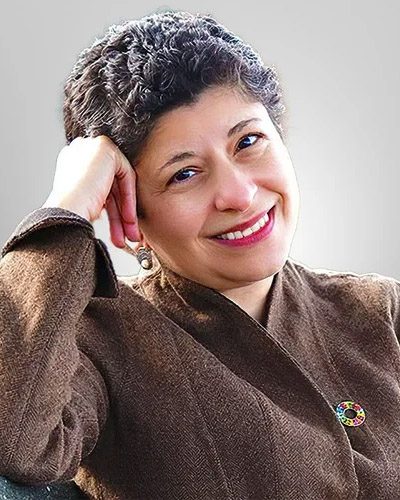
Rather than one "real tragedy", I see interlinked tragedies. Humanity as a whole, has lost a sense of its intrinsic and significant inter-relatedness -- with one another and with the earth. Every war around us today is man-made, built around the hubris of empire, and with little consideration for what we are damaging for future generations. We have come back full circle to a context where taking over other people's lands, natural resources, and dignity, is deemed a matter of entitlement by some, while the rest of the world looks on and, at best, laments. As we have lost the sense of accountability towards our shared earth, we are also losing our sense of obligation towards what man created and nurtured over centuries: the rule of law. Without those defining features of our humanity, we are left with demagogues and sycophants as leaders. Still, I have faith, that interrelated tragedies also engender interconnected resistances, which lead to a transformed sense of consciousness. We may be losing our present, and some of us may be harkening for an idealised past, but the future is in the hands of those who have faith in the interconnectedness of all life.
Lou Marinoff
Professor of Philosophy at the City College of New York, Founding President of the American Philosophical Practitioners Association
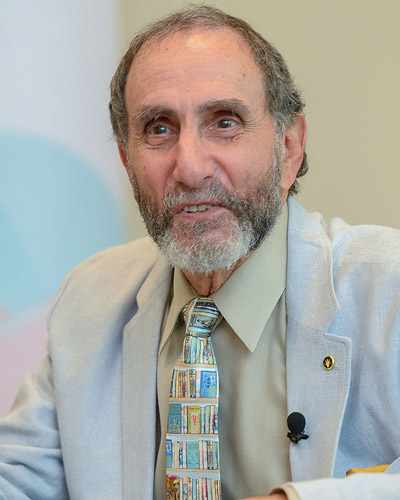
While Rabindranath Tagore rightly mourned the loss of spirituality to materialism, our "real tragedy" is a mosaic of ironies: biologically useful traits that backfire culturally. Four examples:
- Explosive Proliferation versus Ethnosuicide: For most of our history, humans were an endangered species with high mortality rates and short life expectancies. Natural selection’s main "solution"—sexual hyperactivity—abetted survival in the wild. Given even borderline material necessities, it now leads to overpopulation. Then again, in the presence of abundant necessities and attainable luxuries, if hypersexuality is captivated by ideologies that dissolve our primal survival unit—the nuclear family—or is diverted into alternative lifestyles that leave no offspring, a predictable and observable result is voluntary depopulation, or “ethnosuicide”.
- Missing Inhibitions: Unlike apex predators pre-equipped with lethal weaponry, innately helpless and harmless humans lack "hard-wired" submission gestures to de-escalate conspecific conflicts. We aren't inherently murderous; rather, our biology has no capacity to arrest armed conflict, because nature never armed us. Our technologies did. So we must resort to unreliable cultural conventions: white flags, buried hatchets, peace treaties. Morality follows atrocity like a shadow, condemning it but unable to prevent it.
- Illimitable Desires: To survive primitive scarcities, we were gifted with other insatiable appetites, such as acquisitiveness. Without a biological "off-switch", illimitable desires run rampant. Social mores may restrain the "herd", but they cannot curb "alpha" individuals who excel at exercise of power and acquisition of wealth, whether by fair means or foul. “Desire is man’s worst enemy” declared Lord Krishna to Arjuna. All world religions attempt to overcome this inherent liability.
- Double-Edged Swords: Technology consistently strikes a Faustian bargain. Mechanization boosted productivity but turned humans into cogs; medicine doubled life expectancy but pathologized existence; the digital revolution connected the globe but reduced individuals to data points. We have become tools of our tools, as Emerson cautioned a century before Tagore.
16 Responses
One might be tempted to ask, what tragedy? Our present generation is arguably the luckiest in recent history as there has been no world war since 1945 and lives in many places have continued to improve. China is a top example. However, the emerging “agentic AI” revolution is eroding trust and human centrality, creating a slow-burn tragedy not of war but of diminished human value and instability. The world is progressing from historical luck (no world war since 1945, scientific advances) to a present inflection where artificial intelligence—especially autonomous, interventionist systems—threatens to displace human involvement and degrade what counts as reliable perception (“we can’t trust what we see and hear”). The trust collapse spreads into adjacent domains (climate change denial among certain powerful political classes despite daily evidence), reframing the problem as an interaction between technology’s capability to mimic and deceive and a species-level predisposition toward activating the autonomic nervous system with a fight/flight/ fear approach. We are a species wired for conflict and scepticism; we own the moral failure if we let those traits, amplified by AI, define our next era. The stakes are existential: without deliberate controls, the combination of agentic AI and human cognitive biases will normalize disbelief, weaken collective action on real threats, and devalue human judgment.
The question implies that there is an original tragedy, the true tragedy. Spontaneously, however, one thinks of different tragedies, depending on whether one approaches the matter from a historical, sociological, anthropological, scientific, or religious perspective. And perhaps above all, depending on which country one is referring to. This diversity, this multitude of roots at the origin of the essential tragedy, is not incompatible with a primary or deeper root. Shakyamuni Buddha does indeed speak of an ultimate source of all evils. He describes it as fundamental darkness, in contrast to the beneficent light of wisdom. Unconsciousness or denial of the essential laws of life and death, of the dynamics of causality, of the intrinsically inseparable nature of body and mind, of the self and its environment— a collapse of the mind, therefore, that allows greed and anger to prevail, with all the variations we have seen in the past and, as a terrifying tragedy, that we are still witnessing in the present. Aware that too many countries are experiencing the tragedy of war, and considering that nothing is worse than war, I will say here that, in my view, a tragedy is unfolding in France: the passive and resigned acceptance by the media and a silent majority of a future high-intensity war in Europe, or even a new world war. It is linked with the acceptance of the Nuclear deterrence seen as the cornerstone of security. This is absolutely tragic. Thus the deadly poison of indifference gradually seeps into people’s minds. Fortunately, there are women, men, and especially young people all over the world who envision a different world, one of peace and peaceful coexistence. “There is another world, but it is within this one,” wrote the poet Paul Eluard (Complete Works, Gallimard, vol. 1, 1968).
The real tragedy is that truth is truth’s own worst enemy as it doesn’t support itself. The inherent goodness gets annihilated by destructive and bad actions. If I believe in a God, which I do, I would say my God died young. And then I was reborn. It means that I adapted to surviving rather than following my thoughts, jettisoning then instead to compromise to survive.
Mudit Jain
Tagore’s reflection presents a further element in a reflection that by definition is helpless: human kind has not achieved any progress in dealing with tragedy.
Tragedies continue to represent the outer limits of human experience: cognitively, morally and even spiritually. They transcend the confines of the mind; we can’t keep up with them. Tragedies are individual and collective, intimate or public, political or natural – it doesn’t’ make much difference. Everyone, every family, every population that goes through a tragedy, consider it as its own capital suffering, and the rest is nothing, the world and everyone in it is nothing, the sky that covers us is nothing. There is just our tragedy. We call it cancer or genocide, love pain or separation, or whatever. Therefore, there is no definition to “the” tragedy, nor a scale of importance: when it comes, no progress in cultural anthropology or other aspects of “theory” can cope with it. In spite of thousands of years of civilizations, we are still “debutant”.
We are still wired in the same way as when we were living in small groups on the savann and our way of communicating and understanding the environment was based on our senses and what we were told by the elders . Our brain might have grown a little bit but not much. Grown has our accumulated knowledge it has exploded and we face : Thechnological oversimplification i.e. relience on data ,algoritms and scientific language flatten human experience into what can be measured , quantified or optimized. This reduces humanity to scientific categories ,erases emotion , value and moral judgement. and Moral subjectivism:The shared moral framework which in different shapes and forms have been present in the developemn of our human world is eroding and individuals lack of stable shared moral compass which is universally accepted is disapperaing. These trends contributes to the “obscuration” of man not knowing what we are , what we value or what we are here for. The tradegy is that all this lead to IDENTETI CONFUSION-rapid social change and digital life make it harder to form stable identities and human relations. MORAL FRAGMENTATION-shared values weaken and are replaced by tribalism or relativism. THECHNOLOGICAL INFLUENCE-AI,social media and data driven systems shape or choices somtetimes invisibly.HUMANS AS OBJECTS-people become”resources”,”users” or “datapoints” . These threats are not material they are existential and our tradegy and if we understand the problem we can influence our future but we must be made aware and talk about it.
As in Tagore’s time, the tragedy is still obscuration — but not of man’s self. Since his Hibbert Lecture, we have evolved our brave laments that neglect the obvious choice before us, as Professor Karam so clearly challenges us to see. I share her faith that interrelated tragedies engender interconnected resistances, which lead to a transformed sense of consciousness.
From this exercise begun by Strategic Foresight, to movements in pursuit of a new and planetary economics, to the consciousness awakening already underway, the wheels of transformation are turning. What is needed is our shoulders.
Forward.
Instead of answering what the real tragedy is, I will focus on the opposite. Why? Because what you focus on expands. Therefore, let us ask: What is the Real Blessing?
The real blessing is that humanity is a single, living organism in gestation. Just like a child in the womb, our world has progressed through Multiplication—clans and tribes—and Differentiation—Nation-States. We have now entered the final phase: Integration. This is what I call the Organismization of Humanity.
At a cellular level, our body is a holographic reflection of the cosmos. At a macro-level, countries are the organs of a global entity—the Body of Nations. Every nation is challenged to fulfill its unique, non-competitive biological role. As a visionary, I see that India is meant to act as the spiritual Pineal Gland; China as the industrious Liver; the US as the Frontal Lobe; and Bolivia as the physical Heart, anchoring true fraternity—a true challenge!
The real tragedy is only our immature awareness—the failure to recognize that a cell cannot fight another cell without destroying the body. Conflict naturally dissolves into harmony when nations awaken to their organic complementarity.
More about Organismizing Humanity in the e-book extracted from my book Parenting the New World and available here: https://go.hotmart.com/R104899102H
— Christophe J. A. Ranque, Award-winning Author, Visionary, Philosopher, Thought Leader, World Citizen.
Tragedy is not simply suffering, loss, or death. It is the distance that emerges between who we are and who we could become. A person can face adversity and preserve their dignity; a society can endure crises and still uphold its values. True tragedy arises when we abandon what makes us human.
In this sense, I partially agree with Rabindranath Tagore’s idea that tragedy consists in the obscuring of the human being. Today, we live surrounded by information, technology, and unprecedented opportunities for communication, yet this does not guarantee a deeper understanding of ourselves or of others. We often confuse connection with closeness, knowledge with wisdom, and progress with moral improvement.
I believe that the contemporary tragedy lies in indifference. Not so much in the existence of evil or conflict, which have always accompanied humanity, but in our ability to become accustomed to them. When we cease to be moved by the suffering of others, when we accept injustice as inevitable, or when we prioritize our immediate interests over the common good, something essential is lost.
The real tragedy today is not merely that humanity continues to experience war, inequality, environmental degradation or technological disruption. These are symptoms. The deeper tragedy lies in our growing inability to recognise that our futures have become inseparable.
For centuries, societies have organised themselves around borders, identities and competing interests. These distinctions have shaped cultures and political communities, but they have also fostered the illusion that security, prosperity and dignity can be achieved in isolation. In an age defined by climate change, pandemics, artificial intelligence, cyber threats and economic interdependence, that illusion has become increasingly dangerous.
Our greatest failure is therefore not a lack of knowledge. Never before has humanity possessed such scientific understanding, technological capability or institutional experience. Rather, we suffer from a deficit of moral imagination: the inability to translate our growing interdependence into shared responsibility.
Tagore warned against the obscuration of the human being. Today, that obscuration manifests itself whenever we reduce people to enemies, statistics, markets, algorithms or geopolitical instruments. We lose sight of the intrinsic dignity that binds every person, regardless of nationality, culture or belief. When fear replaces trust and rivalry replaces cooperation, we diminish not only others but ourselves.
Yet tragedy is never destiny. History also demonstrates humanity’s extraordinary capacity to build institutions, reconcile former enemies and create norms that once seemed impossible. Peace is not simply the absence of war; it is the continuous construction of relationships based on trust, justice and mutual recognition.
The real tragedy, therefore, would not be that humanity faces unprecedented global challenges. It would be that, despite possessing the knowledge, resources and institutions to confront them together, we fail to recognise that our common humanity remains our greatest source of security, resilience and hope.
Professor Vasilis Politis,
I read your reflection on evil with great interest. I share your concern about the contemporary tendency to minimise—or even abandon—the concept of evil in our philosophical, moral and political vocabulary. I found particularly compelling your argument that evil is not simply the absence of goodness, but an orientation fundamentally opposed to the good. When a person loses their moral compass, it is not enough to move a little further along the same path; one must stop, turn around and recover one’s sense of direction.
My background in psychology, together with my work as a lecturer in Values Education and my studies in peace and conflict, has led me to ask a complementary question.
If we accept that evil exists and that we must recognise it, what can we do to make goodness stronger?
For many decades psychology devoted much of its effort to understanding psychopathology, trauma, dysfunction and the causes of human suffering. This knowledge has been essential. Yet over the past few decades another equally important perspective has emerged: positive psychology. Rather than asking only what makes human beings unhappy, it also asks what enables them to flourish, to love, to cooperate, to find meaning in life and to develop the best within themselves.
Perhaps these two perspectives are not contradictory but complementary.
We need to understand evil in order to recognise it. But we also need to understand goodness in order to cultivate it.
This question seems particularly relevant in today’s world. Faced with growing polarisation, misinformation, hate speech, armed conflicts and increasing distrust between individuals and societies, perhaps it is not enough simply to denounce evil. We should also ask which personal, educational, social and political conditions allow goodness to flourish.
How do we educate more empathetic children?
How do we build healthier families?
How do we create schools that nurture compassion, respect and critical thinking?
How do we strengthen communities in which trust becomes stronger than fear?
How do we build institutions that favour cooperation rather than confrontation?
Perhaps responding to evil does not consist only in resisting it, but also in intentionally generating more goodness.
My current research on neutrality—not as passive detachment, but as an active practice of peacebuilding—has led me to reflect on this idea of balance. We may never eliminate evil completely, but we can certainly create conditions in which goodness, trust, cooperation and hope become stronger.
Perhaps this is one of the defining challenges of our time.
Not only to ask why evil exists, but also what each of us can do to strengthen goodness.
Ultimately, I believe one of the greatest missions of education, philosophy and politics is to create the conditions in which people do not merely avoid evil, but consciously learn to practise the good.
With my sincere appreciation for inspiring this reflection,
Alexandra Monné Bellmunt
Nearly a century after Rabindranath Tagore warned of the “obscuration of man,” the real tragedy today is not the vulnerability of our material security, but the profound erosion of our capacity to recognize one another’s humanity. The real tragedy is not suffering, failure, loss, or even death. These are inevitable aspects of the human journey and often become sources of wisdom and growth. The real tragedy is when human beings lose the capacity to recognize their higher purpose and their connection with one another.
No one needs to tell a flower to be a flower or a dog to be a dog then why on earth, human beings need to be told to embrace humanity. Afterall, every other being in the universe appears to be in sync with its existence. We on the other hand, seem to have lost our internal compasses – our emotions and identities are frequently clouded, fragmented and conflicted. It is therefore right to ask why we have lost our integrity; why do we feel so divided and why do we suffer so much from this internal conflict?
We have mastered the physical and intellectual worlds, achieving breakthroughs in science, computing, and logistics. Yet, we flounder at the moral level. The tragedy is not that solutions to our existential crises are mathematically or economically out of reach. The true tragedy is that our collective will to pursue them together is fracturing.
When dialogue is replaced by division and partnerships yield to bitter rivalries, we diminish our collective human potential. We are effectively hiding behind institutional walls, obscuring the common root that binds us. In doing so, we are not just failing to achieve a better world; we are failing to be truly human. The greatest loss is not what happens to us, but what we fail to become despite the possibilities that life offers us.
I think the real tragedy today and will be in the future, in very simple terms, is that people are not able to be honest with each other. I think that honesty is the best public policy. I can say this from my own experience. I have been able to solve many problems in my personal and professional life by being honest. I think that this principle of honesty can also be applied at a larger level, including in diplomacy and international relations.
Mahatma Gandhi viewed truth (Satya) and non-violence (Ahimsa) as the core principles of his life and philosophy. So, I think that when we are honest with each other and speak the truth, whatever it may be, we can build trust. I think trust is very important when countries are working with one another.
I think that a possible solution to many of the problems humanity is facing today and and will face in the future is that all countries that exist today have to work together to protect and improve our world. Not a single country should be left out of this cooperation. Only then can we solve many of the problems that humanity is facing today and will face in the future.
I think everything is connected to everything in this whole world, or I can say the whole universe. Not a single thing in this world or in this whole universe exists in isolation. When all countries, and ultimately humanity as a whole, work together, I think that many of the major problems we are facing today and will face in the future can be addressed more effectively.
Also, we need to think extensively about the future using the discipline of futures studies and strategic foresight practices. We should think 1,000 years into the future.
The reason I have mentioned 1,000 years only, why not 5,000 years, is that I listened to a recording of renowned physicist Stephen Hawking on YouTube and he said, “I don’t think we will survive another 1,000 years without escaping beyond our fragile planet.” I have not verified the source of this. But yes, I have read about this on many news websites and other platforms. They are saying that Stephen Hawking stated in a 2016 lecture at Oxford University that humanity may only have about 1,000 years left on Earth.
But I think we can save the Earth if all the countries that exist today work together. Otherwise, I am afraid that the whole Earth could face a universal catastrophe.
I would like to acknowledge that I may be completely wrong in some of my own thoughts. I am still at a very early stage of learning about how the world works and I am open to learning from others and changing my views when I gain a better understanding.
As I mentioned in my previous post here, when all countries and ultimately humanity as a whole work together, many of the major problems we are facing can be addressed more effectively.
So, how can this be possible? How can all countries and humanity as a whole work together?
I think part of the answer to this question is educating people to build greater understanding between different cultures and communities. This kind of education could help address different forms of prejudice, bias, misinformation, misunderstandings and discrimination. By addressing these issues, people may be able to develop greater trust in one another. With greater understanding and trust, I think countries and humanity as a whole could work together more effectively.
In summary, the above paragraph can be understood as: Education → Understanding → Addressing issues → Trust → Global cooperation.
The real tragedy is not only war, poverty, injustice or death. These are terrible realities, but behind them lies something deeper: our capacity to witness the suffering of others and gradually become indifferent to it.
Throughout my life, I have photographed people living through war, displacement, political oppression, poverty and profound uncertainty. Repeatedly, I discovered that tragedy is never an abstraction. It has a face, a name, a family, a memory, a hope.
The danger begins when we stop seeing that face.
We have become extraordinarily capable technologically, yet our moral imagination has not necessarily advanced at the same speed. Images of suffering reach us instantly from everywhere, but repetition can make the unbearable seem ordinary.
For me, the real tragedy occurs when another person’s suffering no longer disturbs us—when injustice becomes statistics, war becomes strategy, refugees become numbers, and human beings become categories.
Art and photography cannot repair the world. But they can bear witness. They can preserve a face against disappearance and remind us that behind every historical event stands an individual human life.
The greatest tragedy would be to see suffering clearly—and choose not to care.
We think that the real human tragedy is not just suffering, losing something or not having what we need. Perhaps the most profound tragedy is knowing that our actions can have negative consequences and, despite this, continue to repeat them.
Human beings have knowledge, memory and the ability to anticipate the consequences of our decisions. We know that wars cause death and suffering, that polluting harms the planet, that hatred generates more hatred and that our present actions condition future generations. We also have more scientific knowledge and technology than ever before. However, we continue to repeat many of the mistakes of the past. The contradiction between what we know and what we do could, in itself, be one of the great tragedies of humanity.
This tragedy also has a personal dimension. Sometimes we know what we would like to do or who we would like to become, but fear, insecurity or concern about what others will think prevent us from acting. Over time, we can regret the opportunities we did not take advantage of. However, we cannot forget that the freedom to choose is not the same for everyone: millions of people live in contexts of war, poverty or inequality in which the possibilities of deciding on one’s own life are much more limited.
As future teachers, this reflection takes us directly to education. Educating cannot consist only of transmitting what we know; it must also help to transform knowledge into criteria, responsibility and action. It is not enough for a child to know what respect, empathy, sustainability or peace is: they must progressively learn to incorporate these values into their decisions and in the way they relate to others.
This involves educating people capable of thinking critically, questioning their own behaviors, recognizing mistakes, managing fear and emotions, listening to different perspectives and understanding that their decisions have consequences on others and on the future.
Therefore, values such as responsibility, respect, empathy, freedom, solidarity and care should be part of education from the earliest stages.
Perhaps, then, the real tragedy would be to have the knowledge and the ability to build a better world and not use it. As future educators, our responsibility is to help reduce this gap between what humanity knows and what it finally decides to do.
We think that the real human tragedy is not just suffering, losing something or not having what we need. Perhaps the most profound tragedy is knowing that our actions can have negative consequences and, despite this, continue to repeat them.
Human beings have knowledge, memory and the ability to anticipate the consequences of our decisions. We know that wars cause death and suffering, that polluting harms the planet, that hatred generates more hatred and that our present actions condition future generations. We also have more scientific knowledge and technology than ever before. However, we continue to repeat many of the mistakes of the past. The contradiction between what we know and what we do could, in itself, be one of the great tragedies of humanity.
This tragedy also has a personal dimension. Sometimes we know what we would like to do or who we would like to become, but fear, insecurity or concern about what others will think prevent us from acting. Over time, we can regret the opportunities we did not take advantage of. However, we cannot forget that the freedom to choose is not the same for everyone: millions of people live in contexts of war, poverty or inequality in which the possibilities of deciding on one’s own life are much more limited.
As future teachers, this reflection takes us directly to education. Educating cannot consist only of transmitting what we know; it must also help to transform knowledge into criteria, responsibility and action. It is not enough for a child to know what respect, empathy, sustainability or peace is: they must progressively learn to incorporate these values into their decisions and in the way they relate to others.
This involves educating people capable of thinking critically, questioning their own behaviors, recognizing mistakes, managing fear and emotions, listening to different perspectives and understanding that their decisions have consequences on others and on the future.
Therefore, values such as responsibility, respect, empathy, freedom, solidarity and care should be part of education from the earliest stages.
Perhaps, then, the real tragedy would be to have the knowledge and the ability to build a better world and not use it. As future educators, our responsibility is to help reduce this gap between what humanity knows and what it finally decides to do.
Educations students of University of Andorra