
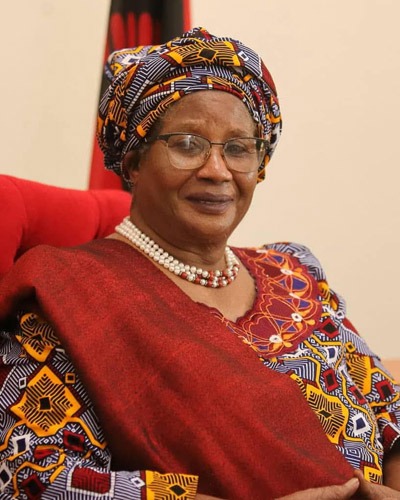
Dr. Joyce Banda
4th President of the Republic of Malawi
Freedom should mean more than ability to exercise political rights. I believe socio-economic emancipation of our people is a sure way of being free. True freedom is the ability to exercise the right to access better life through education, better health and economic empowerment without hindrances. There is no doubt that Nelson Mandela shall forever embody the resilience in the fight for freedom.
But as Kwame Nkrumah opined, "Political independence, though worthwhile in itself, is still only a means to the fuller redemption and realization of a people." Women economic empowerment is the nucleus for community social empowerment as such households are able to educate their children and to a larger extent are food secure. Strong households are building blocks to sound political freedom as choices are premised on national rather than individual interests.
Political freedom without socio-economic empowerment for our people is a recipe for anarchy in our democracies. It is only through total freedom that children can live a better childhood. Girls can be girls and not household minders, robbing them of their innocence. Our youth can dream and live their dreams. Financial independence leads to political freedom. The attainment of better life through socio-economic empowerment is, therefore, true meaning of freedom.
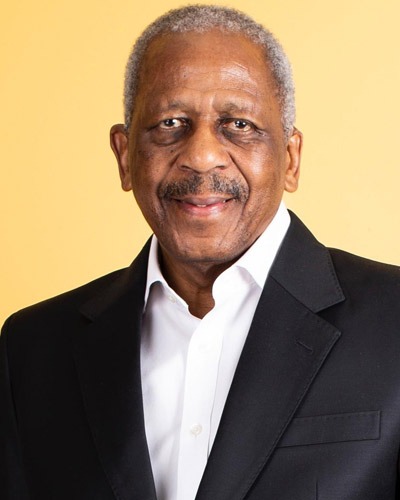
Mathews Phosa
Close associate of Nelson Mandela and former Treasurer of the ANC, South Africa
Freedom for me stems directly from the core values of the Freedom Charter, namely that the people shall govern, all groups are equal before the law and the people shall share in the country’s wealth.
To a large extent we have achieved the first two core values, although administrative shortcomings often interfere in our esteemed goal that all people should be equal before the law.
On the third issue of the people sharing in the country’s wealth, we have a long way to go. The massive divide between the haves and have nots remain a major issue of concern. Our high unemployed figure is unacceptable and remains an obstacle in any honest discussion about post-liberation freedom.
I would like to add a fourth element to the definition of freedom. Whilst we have the constitutional principles of freedom of choice and association embedded, we still need to shed our sensitive skins regarding the right to criticise and voice our opinions fearlessly when we differ from the government of the day.
Personally, I will only feel free when all South Africans reap the economic benefits of political freedom.
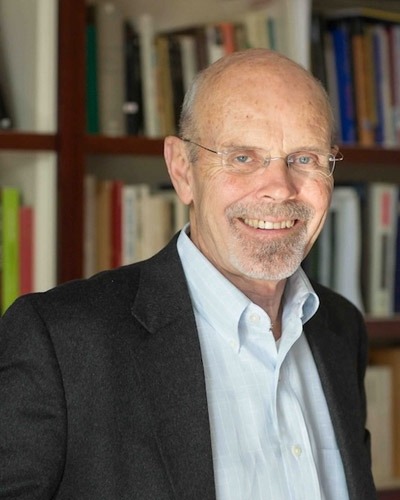
Philip Pettit
Professor of Human Values at Princeton University and Distinguished Professor of Philosophy at the Australian National University
To have cast off your chains is to be rid of the social shackles that would undermine your status as a free person. With supports replacing shackles, it is to enjoy such security under local norms and laws—such political freedom—that you can look others in the eye without reason for fear or deference. You can walk tall.
But to have cast off your chains is also to be rid of the personal shackles that block us from thinking for ourselves, cultivating our strengths, and standing up to others. And that requires the sort of independence that you may fail to achieve under the best social system. It requires the ethical freedom that comes with the will to make commitments and the courage to keep them.
Freedom cannot be won in solitude, as Mandela also reminds us. You can only hope to maintain your political freedom if you join with others in sustaining a liberating system of norms and laws. And you can only hope to achieve ethical freedom if you live with others in the mutual encouragement and scaffolding that are required, paradoxically, for independence. In freedom, as in so many dimensions, no one is an island.
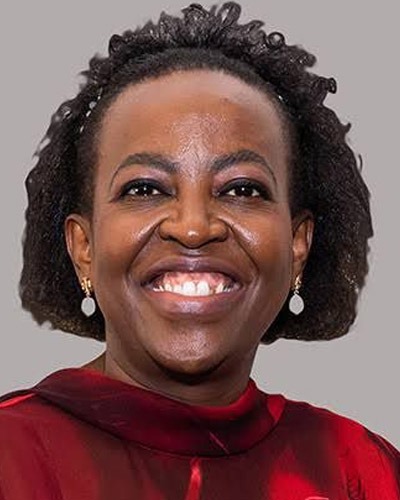
Maropene Ramokgopa
Minister in the Presidency Responsible for Planning, Monitoring and Evaluation, South Africa
Freedom: A Responsibility, Not Just a Right
As Nelson Mandela once explained “For to be free is not merely to cast off one’s chains, but to live in a way that respects and enhances the freedom of others” His words remind us that freedom is more than personal liberation; it is a shared duty.
To me, freedom is the opportunity to live with dignity, purpose, and hope. It means thinking independently, expressing ideas without fear, seeking education and meaningful work, and contributing to society. These opportunities are only valuable if everyone can access them, irrespective of their race, gender, background, or economic status.
I believe that Freedom goes hand in hand with justice. A person facing poverty, inequality, discrimination, or violence cannot be truly free. Political rights mean little if many remain stuck in situations that rob them of their potential. True freedom calls on societies to be inclusive, creating spaces where everyone can thrive through quality education, decent jobs, healthcare, and equal opportunities.
Furthermore, freedom requires respect for others. It shows through tolerance, empathy, and a commitment to protecting the rights of those with different views or experiences. When we use our freedom to support others rather than push them aside, we reinforce democracy and social unity.
As South Africans, we are taught by Mandela's legacy that freedom is not a past achievement but an ongoing journey. Each generation faces new injustices which must be confronted to continue the work of building a nation that includes everyone.
In the end, freedom is measured not by what we can do for ourselves, but by how we help others reach their potential—lift as you rise.
The true expression of freedom lies in using our rights, talents, and opportunities to expand the freedom and dignity of all.
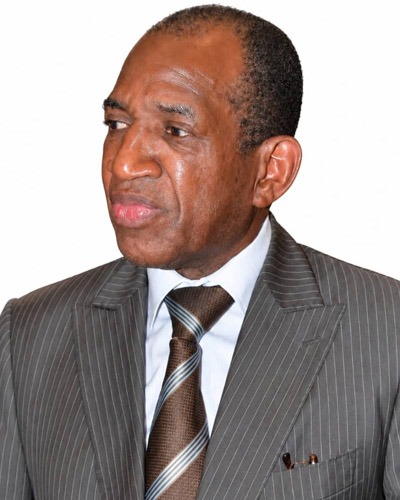
Kabiné Komara
Former Prime Minister of the Republic of Guinea
Freedom lies at the very heart of human life, as it shapes our social, political, and economic development.
Broadly speaking, freedom is defined as the absence of constraints or anything that may restrict the scope of action of an individual or an institution. The absence of freedom is a source of frustration and stress and can be a powerful factor of instability.
In its broadest, even most radical sense, defining freedom as the absence of limits may imply an individual’s ability to extend their will or actions indefinitely, without consideration for those with whom they share a social or professional environment.
But is such freedom possible? Is it even desirable?
In truth, adopting such an approach may prove counterproductive, insofar as it infringes upon the freedom of those around us. Freedom understood purely as the absence of constraints can therefore lead to oppression or tyranny.
This is why Nelson Mandela’s understanding of freedom as “living in a way that respects and enhances the freedom of others” seems more appropriate. It promotes social balance, collective well-being, and the sustainability of the political community, while leaving little room for the most powerful to impose their will on other members of society.
In Africa, traditions and customs passed down from generation-to-generation place great importance on collective well-being. This is reflected in the well-known concept of Ubuntu, popularized by Nelson Mandela and Desmond Tutu. Rooted in empathy, generosity, and sharing, Ubuntu represents an African expression of universal wisdom. It can also be understood through the idea that “a person is another person’s remedy.”
To me, Ubuntu best embodies the meaning of freedom through hospitality, compassion, and respect for oneself and for others—values that lie at the heart of African wisdom. This altruistic philosophy reminds us that collective well-being cannot coexist with harming or causing hardship to our neighbours in the name of an unlimited exercise of individual freedom.
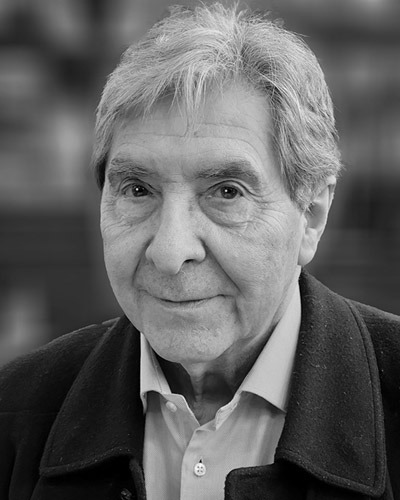
Pierre Toutain-Dorbec
Artist, Photographer, Poet with a humanist perspective
Freedom is one of those words we use easily, as though its meaning were self-evident. It is not. To me, freedom has never meant simply doing whatever we please. That is, to have the courage of our convictions, to question what we are told, and to stay true to our conscience even when it would be easier to conform.
I have spent much of my life observing people across cultures, religions, wars, political systems, and profound social change. Again and again, I have seen that freedom is fragile. It can be taken from us by governments and institutions, but it can also disappear quietly—through fear, indifference, prejudice, material obsession, or our willingness to surrender judgment to others.
Technology now presents another challenge. Artificial intelligence can enrich our creativity and knowledge, but no machine should take over our responsibility to think, feel, question and choose. Progress without humanity is not freedom.
For me, art is an expression of freedom because it refuses prescribed answers. It allows us to look at the world—and ourselves—without permission.
Freedom therefore carries an obligation: to defend the dignity and freedom of others, especially those whose voices are ignored.
Perhaps true freedom begins there: not with power, but with conscience.
3 Responses
Freedom, to me, is the right and ability to connect with anyone in the world, free from
barriers imposed by governments, prejudice, or other artificial constraints.
Freedom is the ability to express what you think and understand your own decisions. It is being able to be who you are and choose my own path without feeling obliged to act only for the expectations of society or to please others. But being free does not mean being able to do anything: greater freedom is combined with the freedom of others and, therefore, it also implies respect and responsibility.
This way of understanding freedom is also apparent. As future teachers, consider that education has to offer children and young people in countries where they can give their opinions, make mistakes, make mistakes and make decisions. The teacher does not always have to decide for the student. Rather accompanies and progressively provides the necessaries so that he or she is an autonomous, critical and responsible person, capable of exercising his or her freedom with respect to others.
All we learn at school also has a social dimension. For people to truly exercise their freedom, the State must guarantee rights and establish a framework of norms and laws that protects both individual freedom and coexistence and equality between people.
However, guaranteeing the rights of each State is not enough.↻Wars, conflicts or violence can deprive millions of people of the possibility of deciding about their own lives. Therefore, freedom also requires dialogue, cooperation and agreements between States, aimed at building societies in which people can live with dignity and sense.
Thus, we view freedom as a shared responsibility that extends from the individual to education, from education to society, and from society to the world.
For us, being free means being able to think, decide, and forge our own path, while understanding that we live in a shared world. Freedom is not merely the ability to choose; it is learning to choose without negating the possibility for others to be free as well.
To me, freedom is one of the deepest expressions of human dignity. It means being able to think, choose, express oneself, and shape one’s own path without fear. Yet freedom cannot simply mean doing whatever we want. We are truly free when our freedom can coexist with the freedom of others.
Nelson Mandela expressed this with remarkable simplicity: to be free is not merely to cast off our own chains, but to live in a way that respects and enhances the freedom of others. This understanding transforms freedom from an individual right into a shared responsibility.
In this respect, I agree with Joyce Banda when she extends the meaning of freedom beyond political rights. A person without access to education, healthcare, or decent living conditions can hardly exercise freedom to its fullest extent. Similarly, Maropene Ramokgopa connects freedom with justice: poverty, inequality, discrimination, and violence can turn formal rights into freedoms that, in practice, not everyone is equally able to exercise.
Freedom, however, also has an inner dimension. Philip Pettit reminds us that there are not only social chains, but also personal ones that can prevent us from thinking for ourselves, developing our abilities, or finding the courage to stand by our convictions. Paradoxically, he also reminds us that no one builds their freedom entirely alone: we need one another, as well as institutions capable of safeguarding that freedom.
This relational dimension seems essential to me. The African principle of Ubuntu, invoked by Kabiné Komara, reminds us that our humanity is shaped through our relationships with others. From this perspective, freedom does not mean endlessly expanding our own individual space, but building a society in which I can be free without diminishing the freedom of another person.
As an educator, however, I would add another question: Do we learn how to be free?
I believe we do. And I believe this is one of education’s greatest responsibilities.
Educating for freedom does not mean telling children and young people what to think. It means teaching them how to think for themselves. It means giving them the tools to question, reason, disagree, make mistakes, listen to other perspectives, and make decisions while accepting responsibility for their consequences. It means educating autonomous individuals who are also conscious that they share the world with others.
For this reason, education for freedom must also be an education for responsibility, coexistence, and peace. In an increasingly polarised society, we need to learn that disagreement does not turn another person into an enemy; that defending our convictions does not give us the right to humiliate those of others; and that freedom of expression also requires us to consider the responsibility carried by our words.
Schools and universities therefore bear an enormous responsibility. We should not educate people merely to exercise their own rights, but also to be willing to protect the rights of others, particularly those who think, live, or believe differently.
This connects with an idea expressed by Pierre Toutain-Dorbec that I find particularly profound: freedom can disappear not only through the actions of governments, but also quietly, through fear, prejudice, indifference, or when we surrender our own judgement. He therefore suggests that perhaps true freedom begins not with power, but with conscience.
And perhaps this is where, for me, the deepest meaning of freedom lies.
To be free is not to be able to do everything I want. It is to be able to decide who I want to be, while always remembering that I share this world with others.
As a university professor and educator of future teachers, I believe we have a responsibility to educate people who are able to think freely, but also to live together; who can defend their ideas, but also listen; who can exercise their rights, but also protect the rights of others.
Because perhaps the fullest expression of freedom is not the freedom that ends with me, but the freedom that helps others to become freer too.
And this kind of freedom, like peace, can also be learned and cultivated through education.