
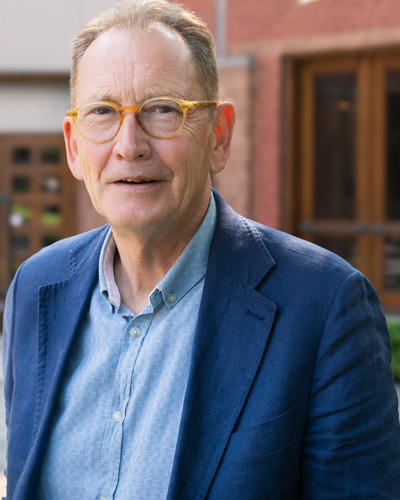
Sir Graham Watson
Adjunct Professor of Munck School of University of Toronto, former Leaders of Alliance for Liberals and Democrats in the European Parliament
For bribe, tribe or family, for faith, belief or nation, or simply in contest over a mating partner; almost uniquely among animal species, we human beings have been ready to kill our own since our specie’s emergence. Often, all it takes is the mobilisation of human weakness in the pursuit of ‘othering’ for mass killing to occur..
The world’s most successful political peace project to date, the supra-national EU, is now better trusted by its citizens as a guarantor of peace than its component states; yet its mortar was laid around the bricks of NATO militarism and populist political movements again threaten its integrity.
As the Greek poet Cavafy notes in his eponymous poem, the barbarians - or at least the threat they are deemed to pose - may serve at times to enhance social cohesion within boundaries. A ‘brotherhood of man’ (itself now by definition exclusive) appears still beyond humankind’s sight. Is an advanced liberal education our only hope of an antidote? It may be a sine qua non but is it a guarantee? Europe’s left wing intellectuals who famously fought the fascists in Spain’s civil war claimed it was ‘not for glory or honour or medals or pay’, but ‘with eyes wide open, for we saw no other way’.
Lennon’s visions of no country, no religion, even no possessions offer a fine flight of fancy. What is sorely needed is a shared sense of community or belonging.
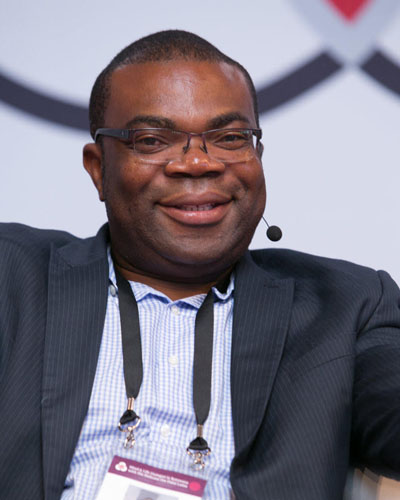
Michael Onyebuchi Eze
Chair of Africana Studies, at California State University, Fresno, and Philosopher of African tradition
Humanity Has Been Bordered: Ubuntu and the Future Beyond the Nation-State
The nation-state, in its Euro-modern imagination, is one of history’s most enduring fictions. It universalized a provincial experience and taught humanity to believe that borders were natural, that sovereignty was sacred, and that belonging could be contained by lines on a map. Beneath its language of citizenship and order lingers the long shadow of empire, together with the old and dangerous seduction that it is noble to kill and die for the nation — the Big Lie.
Still, the human spirit has always exceeded borders.
Rivers cross nations without passports. The atmosphere belongs to no flag. Grief travels freely across oceans. So does hope. The child fleeing war, the stranger seeking refuge, the farmer watching the sky for rain — all remind us that our deepest vulnerabilities are shared long before they become political.
Perhaps the crisis of our century is not merely that we have nations, but that we too often mistake them for the final horizon of human belonging.
Ubuntu offers another way of imagining the world:
I am because you are.
Not because you are identical to me, nor because you speak my language, worship my God, or carry my passport. Your humanity is not a threat to mine. It is one of the conditions through which my own humanity becomes possible.
The future may not require the disappearance of nations, but their humility: a recognition that no country can flourish alone on a wounded planet; that sovereignty without solidarity becomes isolation; that humanity cannot survive as a competition of frightened enclaves.
We do not need a world without difference. We need a world where difference is no longer feared, where the stranger is not first encountered as danger, and where our political imagination becomes large enough to match our shared planetary fate.
Perhaps then we may finally learn that the earth was never meant to be inherited by borders, but shared by human beings.
That is all.
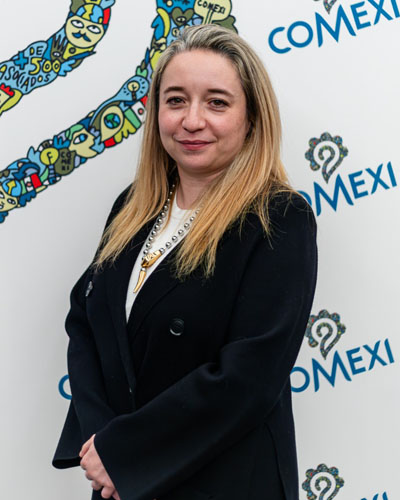
Alejandra López de Alba Gomez
Director General, Mexican Council on Foreign Relations
Yes, but only as an exercise in humility. I can only venture to imagine what a world without the nation state, as we know it, might look like. The Westphalian state organized power through sovereignty, territory, borders, citizenship and a monopoly over legitimate violence. But those concepts are not natural facts. They are the vocabulary of one historical era. The question, then, is more radical than whether countries will disappear. It is what remains of political authority if we strip it of the post-medieval concepts that made the nation state intelligible. Perhaps “sovereignty” itself will lose meaning, or become too narrow to describe power. The next order may not be defined primarily by territory, but by access: access to data, energy, water, compute, mobility, security, credit, health, identity and knowledge. It may be organized through flows, platforms, standards, infrastructures and dependencies rather than borders alone.
In such a world, non-state actors are not peripheral. Corporations that control cloud systems, artificial intelligence, satellites, payment rails, biotechnology or communications infrastructure may wield forms of authority once associated with states. They may not govern by flag, but by protocol; not by conquest, but by architecture; not by law alone, but by the terms of access to the systems through which life is increasingly lived.
This does not mean that corporations are replacing states as the new sovereigns. It means something subtler, and perhaps more consequential: the structures of power have been shifting for a long time away from the prototypical Westphalian order. Authority is no longer exercised only through territory, law, diplomacy or coercion. It is increasingly embedded in systems: standards, platforms, protocols, infrastructures, supply chains, financial channels, data regimes and technological dependencies. Power may still wear the language of the state, but it also operates through the conditions under which individuals, communities and even governments gain access to the networks that make modern life possible.
The unknown is whether this transformation widens human possibility or produces new hierarchies. Will the future be organized by citizenship, identity, income, technological capacity, ecological vulnerability, level of development, or proximity to critical networks? Will asymmetry remain the grammar of power, merely translated from territory into code, infrastructure and access? Or can humanity imagine a more balanced order before the new forms of dependence become as rigid as the old borders? Or before fear, scarcity and technological acceleration harden into a new fatalism?
Political authority is becoming less concentrated in the familiar symbols of sovereignty and more dispersed across the architectures that shape human destiny. Imagining no countries, then, is not imagining no politics. It is asking whether we will act upon dispersion of power before it outruns our political imagination; whether belonging can survive without enmity; and whether authority can be reorganized around shared human destiny rather than seeking new forms of domination in the guise of survival.

Augusto Lopez-Claros
Executive Director, Global Governance Forum
Perhaps the greatest scientific insight of the late twentieth century was not technological but civilizational: the mapping of the human genome revealed with extraordinary clarity that there is only one human race. The tiny fraction of genes that explains differences in skin color or physical appearance is biologically insignificant compared to the overwhelming genetic inheritance we all share. As geneticist Craig Venter observed at the completion of the Human Genome Project, “Race is a social concept, not a scientific one.”
And yet our educational systems, political cultures, and collective imagination have not caught up with this reality. We continue to define ourselves primarily through narrower identities—national, ethnic, religious, or ideological. We remain willing to shed blood in defence of borders that are, in an important sense, artificial constructions of history. As ‘Abdu’l-Bahá, the head of the Bahá’í Faith, said in a speech at Stanford University in 1912: “God created no frontiers between France and Germany.”
The tragedy is that the problems now threatening humanity are fundamentally global in nature. Climate change does not stop at borders. Pandemics do not require passports. Nuclear war, ecological collapse, financial instability, and technological disruption spare no nation.
We increasingly inhabit a single interdependent system while continuing to think politically in fragmented and tribal terms. This does not mean that nations, cultures, and local attachments must disappear. Diversity is one of humanity’s great strengths. But the nation-state can no longer be the highest horizon of our political imagination. We must gradually cultivate a broader loyalty: to humanity as a whole and to the planet we collectively inhabit. Such a transformation cannot be imposed by decree. It must begin in consciousness and education. From early childhood, human beings should learn not only the history of their nation, but also the reality of our common origins and shared destiny. These ideas must become part of our mental DNA. Only then will it become possible to imagine institutions and forms of governance that reflect the deeper truth of our interdependence.
We spend our lives defending territories that, in the end, become our tombs. But the earth itself is our common homeland. The challenge before humanity is whether our moral and political imagination can evolve quickly enough to recognize this reality before the crises we face overwhelm our capacity to cooperate.

Janos Pasztor
Former UN Assistant Secretary-General for Climate Change
The concept of the nation state is relatively new in world history – it wasn't always like that. At the same time, history cannot be undone, and we cannot go back to something that has been but is no longer.
However, I believe it is possible to envisage a world without nation states, although at this point I find it difficult to describe such a world, or envision a path to get there, given the fact the Western (originally essentially European) concept and practice of nation states has become the leading way to organize people, the economy and the planet. I can, however, envisage and certainly desire that increasingly some specific responsibilities of the nation state be shifted into global/planetary processes and institutions. We have seen some of this through international treaties, where sovereign nation states collectively agree to give up small parts of their sovereignty for the common good. This approach could be increased, and over time one can imagine the evolution of a world of parallel governance based on subsidiarity: global/planetary institutions for planetary issues and local/national institutions for the rest.
But this brings me to the second, and perhaps more important part of the question. Would there be nothing to kill or die for? Unfortunately, even within existing nation states, religious, economic and political elites have regularly found many reasons to kill and die for. There are plenty of examples of civil wars (e.g., the USA in the 19th century) or other violence within existing nation states (e.g., race-based apartheid in South Africa and the genocide of Jews by the Nazi regime in Germany in the 20th century). Luke Kemp, in his recent book Goliath's Curse, has shown that the concentration of power inherent in hierarchical societies — of which the nation-state is the modern form — drives violence both within and between them, and that the shift from egalitarian hunter-gatherer groups to sedentary, surplus-producing hierarchies substantially increased the reasons to kill and die for. Therefore, if the world could move away from nation states, one could perhaps imagine fewer reasons to kill and die for.
Fundamentally, however, if we wish to drastically reduce, or even try to eliminate the reasons to kill and die for, we need to look much more at how societies and the economy are organized; what fundamental values are taught and experienced; and explore new ways of defining and then practicing human progress in a multi-species world.
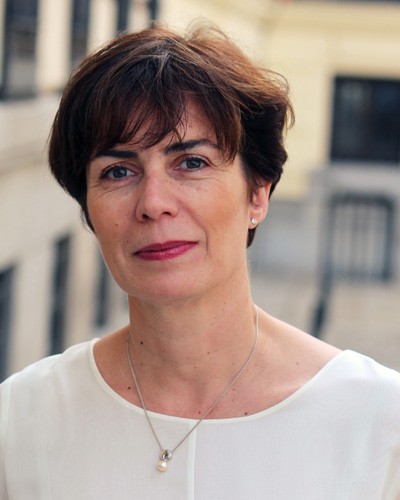
Cristina Manzano
Senior Columnist and Director of External Relations at the Ibero-American Secretariat
Two hundred years ago, Simón Bolívar invited the leaders of the newly established Hispanic American republics to Panama to convene the Amphictyonic Congress, named after the ancient Greek term referring to a league of neighboring cities. The aim of the meeting was to form a confederation of nations. They had all the right ingredients: shared values, common principles, a common language, and the aspiration to bring prosperity to their peoples, who only a few years earlier had belonged to the same empire. And yet, the project did not succeed.
When Latin American countries gathered once again in Panama in June, they renewed calls for regional integration, but without a strong commitment to advancing it. The nation-state will continue to prevail over economic, political, or even emotional logic.
No, I do not foresee countries disappearing in the near future, nor being replaced by a new form of global governance, despite the evident need for it. In an increasingly uncertain world, people have turned to identity to feel part of something larger, to find meaning amid chaos. Yet I firmly believe in the importance of continuing to foster connections—bringing people together, creating opportunities for collaboration across borders, whether national, subnational, local, or even imagined. These efforts can help restore a sense of our shared humanity and strengthen our collective responsibility to care for our planet.
10 Responses
Your third question of no countries and nothing to die for
Sir,
Order in the jungle is maintained through power and seniority. Similar rules apply to humans. I cannot imagine no countries and nothing to die for as humans are always dominating and it has always been so. There has to be the invisible hand of God at work for no countries and a common superior power over us to ensure order. Democracy doesn’t work as a government is in power to supposed to ensure law and order though that isn’t the case and the government starts dominating. The other question of nothing to die for can hold good as a sacrifice for the common good has become subservient to an individual good in a majority with some outstanding exceptions.
So to conclude, their will always be countries and most people will not die for their country.
Ce la vie
Mudit Jain
John Lennon invited us to imagine a world without countries. Today, perhaps the more important question is not whether we can imagine a world without borders, but whether we can imagine humanity guided by a system of values capable of responding to the shared challenges of the twenty-first century.
Shalom H. Schwartz’s theory of universal human values offers a particularly useful perspective on this question. Schwartz argues that all societies share the same fundamental values; what differs is not the values themselves, but the priority they assign to them. From this perspective, the future will depend less on whether the nation-state disappears than on the hierarchy of values that guides individuals, institutions, and governments.
We are living through a period of growing tension between two broad value orientations. On the one hand, values of self-enhancement—power and achievement—combined with the pursuit of security, conformity and, in some contexts, an exclusionary interpretation of tradition, reinforce geopolitical competition, identity-based polarization and the belief that protecting national interests must prevail over shared responsibility. These values are not inherently negative. Every society needs stability, cohesion and security. The problem arises when they become the only lens through which we interpret the world.
The defining challenges of our time—climate change, pandemics, migration, artificial intelligence, widening inequalities and armed conflict—cannot be addressed from that perspective alone. They require strengthening the values of self-transcendence: universalism, which calls us to recognize the equal dignity of all people and our responsibility towards the planet, and benevolence, which transforms solidarity into everyday practice. They also require genuine openness to change, grounded in self-direction, critical thinking, creativity and the willingness to innovate in response to an increasingly complex and interdependent world.
This transformation does not require the disappearance of nation-states. National identities, cultures and traditions remain legitimate sources of belonging and social cohesion. However, in a deeply interconnected world, no country can secure its own prosperity, security or the well-being of future generations in isolation. Borders may continue to exist on maps, but our greatest challenges no longer recognize them.
Perhaps the real question is no longer whether governance should be national or global, but whether it should be driven by competition or by shared values. Future institutions will undoubtedly continue to apply the principle of subsidiarity, but they must also be rooted in a political culture capable of balancing security with solidarity, identity with cooperation, tradition with innovation, and freedom with collective responsibility.
Imagining a world beyond the nation-state does not mean imagining a world without countries. It means imagining a humanity capable of placing universalism and benevolence alongside security, understanding power as a means to serve the common good rather than an end in itself, and embracing diversity not as a threat but as a source of cooperation. Perhaps the greatest challenge of our time is not to redraw political maps, but to redefine the values that shape our decisions. Only when our hierarchy of values reflects the reality of an interdependent humanity will we be able to build forms of governance capable of meeting the shared challenges of the twenty-first century.
This piece lays the foundation to completely alter the narrative that dominates
political discourse. We are a species talking about systems that no longer function for the betterment of the world. We are blinded to the essential oneness of humanity by a material lens that divides us into developed and underdeveloped, thus blinding us to seeing the whole of humankind.
Many thanks for initiating this important discussion. In answer to the question: Yes, I can imagine a world beyond the nation-state, and I think this is something we should all be working towards. As the eminent international relations scholar Susan Strange put it over a quarter-century ago (Review of International Studies, vol. 25, pp. 345-354, 1999):
“From a globalist, humanitarian and true political economy perspective, the system known as Westphalian has been an abject failure. Those of us engaged in international studies ought therefore to bend our future thinking and efforts to the consideration of ways in which it might be changed or superseded.”
The nation-state won’t disappear anytime soon (sad-to-say), but it can be transcended, presumably by a federal structure employing subsidiarity on a global scale to better manage global-level problems. This topic was discussed in depth at a two-day international conference on “Does the World Need a Government?”, held at Birkbeck College, University of London, in August 2025. For those interested, a summary of this meeting, including a link to videos of the presentations, can be found on the World Orders Forum at: https://www.wgresearch.org/_files/ugd/bdf8dc_38eb6e4c943048c09549b9c40dfd840f.pdf
The keyword that recurs in the reflections above, sometimes wrapped in other terms, is belonging. One question is: How do we fulfill this need without destroying ourselves? Or, in a more positive phrasing, how do we turn this need to the fulfillment of our physical and moral survival, even our well-being? Moral survival might sound like a strange expression, but it is as real as hunger and thirst. I am an author who has written about the devastating multi-generational consequences of war and genocide; it is not only the physical destruction or the prospect of it that people sometimes don’t survive, but also the emotional no-man’s-land, the meaninglessness, that destroys the spirit and the will to live. In my writing, I’ve also explored belonging and well-being in the microcosm of the tiny, remote Nordic island where I live. In these, I’ve explored whether there are values that most of us can share. One of the paradoxes of the polarized age we are living through is that it reveals what those values are: the reverse of what the political forces attempting to divide us would have us believe. About twenty years ago, I set out to write a manuscript entitled “The New Belonging,” an attempt to explore a multi-tiered sense of belonging to meet the challenges of a new age. It looked back to ancient philosophy, but also to contemporary philosophy and literature, both rich sources for considering the way forward. It seemed as urgent to me then as it is today. Interestingly, publishers at that time simply could not get their heads around it. Is this an American story, a European story? What is the market? They asked. One of the challenges in realizing a new sense of belonging is that both our public and private institutions still see things mainly through the prism of national flags and anthems. This is where each of us can get to work right now. This does not mean deriding our nationalities– the nation-state has taken us to the abyss, but it has also been an important stepping stone in human development. Instead, it means recognizing that, like all cherished old memberships, they won’t serve all our needs and that, by continuing to be doggedly beholden to them, we only court disaster.
There’s a great deal of inspiration in the thoughts expressed here. Reading Michael Onyebuchi Eze on how we “universalized a provincial experience and taught humanity to believe that borders were natural” prompts a thought of Ghana’s first republican constitution under Kwame Nkrumah. In the confident expectation of an early union of African states, Article 2 conferred on Parliament “the power to provide for the surrender of the whole or any part of the sovereignty of Ghana” — a nation writing the anticipation of its own transcendence into its founding text, in the name of a larger belonging. This is historically remarkable.
One might see in it Ubuntu carried to the scale of the state: the conviction that a nation, like a person, becomes fully itself not in isolation but through others. Perhaps there’s a lesson here — not in offering a utopian model of governance imposed from above, but in seeding the anticipation of a post-Westphalian order, and so carrying forward an idea already six decades old.
Great read. It offered several useful takeaways.
I can imagine a world where countries exist without becoming walls between human beings.
I’ve traveled and worked in many cultures and have learned that identity is never as simple as a passport. We inherit languages, histories, religions and traditions, but underneath them are the same basic human needs: dignity, security, love, belonging and hope for our children.
Countries can preserve culture, organize society and give people a sense of shared history. The danger begins when national identity becomes superiority—when a border determines whose suffering matters and whose does not.
I do not believe we need to erase countries to transcend nationalism. We need to recognize that our humanity precedes our nationality.
The earth itself knows no borders. Rivers cross them, birds cross them, clouds cross them. Only human beings draw lines and sometimes decide that those lines are worth killing or dying for.
Perhaps the challenge is not to imagine a world without countries, but a world in which no country requires an enemy to define itself.
I am French-American, but before either of those identities, I am a human being. That is the citizenship we all share.
We can imagine a world without borders or flags separating people, but eliminating countries would not necessarily mean eliminating conflicts. Human beings would continue to have different identities, cultures, religions, ideologies, interests, and ways of thinking. Issues related to resources, power, and inequality would also continue to exist. Perhaps, therefore, the challenge is not to imagine a world without differences, but rather a world in which differences do not become reasons to hate, confront, or kill one another.
Identities and a sense of belonging are part of individuals and communities. The problem arises when these identities create a “we” opposed to a “them,” especially when this division is fueled by hate speech, prejudice, or dehumanization. Instead, let us imagine a society in which feeling connected to a country, a culture, or a community is compatible with recognizing that we are all part of the same humanity.
This does not mean stopping ourselves from disagreeing. It means learning to disagree without turning the other person into an enemy. Respect, equality,solidarity, dialogue, cooperation, and the ability to reach consensus should allow us to manage conflicts without resorting to hatred or violence.
As future teachers, we believe that education is one of the most powerful tools for making this transformation possible. Schools can prevent hate speech and teach children from an early age to listen, engage in dialogue, manage their emotions, recognize other perspectives, and resolve conflicts peacefully. School mediation services and practices can turn everyday conflicts into learning opportunities for peaceful coexistence.
However, this type of education should not depend solely on the initiative of each school or teacher. We propose that coexistence, dialogue, mediation, peaceful conflict resolution, and the prevention of hate speech become a compulsory and cross-curricular competence within the education system, developed progressively from early childhood education through to university.
This competence could be part of a national agreement on education and coexistence, ensuring its continuity beyond political changes and turning peace education into a shared commitment across society.
Perhaps a world without countries is a utopia. But a society that teaches every generation to live with differences, disagree without hatred, and resolve conflicts without violence should not be. As future educators, we believe that this world begins to be built in the classroom.
I believe that the debate about a world beyond the nation-state must begin with a prior question: our tendency to organise collective life through hierarchies. In my view, these respond both to the need to secure and distribute resources for subsistence and to the desire to control other human beings. For this reason, I do not believe that moving beyond the nation-state necessarily means overcoming relations of domination. These could be reproduced within global institutions or within the technological and economic structures described by Alejandra López de Alba.
I understand the nation-state as a historical construction that provides protection against adversity and expresses a particular understanding of community. Its being artificial does not mean that its effects, or the needs it addresses, are unreal. We seek a familiar environment in which we can feel safe, recognised and connected to others. The problem arises when this search for protection becomes exclusion, or when our own security is used to justify the subordination of others.
In this sense, I agree that we need to broaden our responsibility towards humanity and the planet, but I believe that this proposal must explain how it will preserve the security and sense of belonging that people find in their communities. A shared human identity may be a desirable aspiration, but it remains insufficient unless it translates into concrete guarantees of protection, participation and access to resources.
The central question, therefore, is how to organise power and limit its abuses at every level. Janos Pasztor’s proposal to combine planetary institutions with national and local institutions seems to me a way of reconciling global cooperation with the need for belonging. However, it would also require democratic checks to prevent a broader authority from concentrating even more power.