
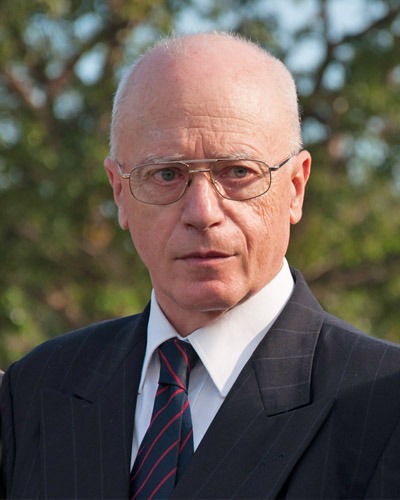
Hans Köchler
Professor emeritus of Philosophy and President of International Progress Organization
In our world of civilizational diversity, there is no easy, catch-all answer. Factors determining the answer may be a person’s state of consciousness (spirituality) and the way an individual is embedded within a specific, culturally mediated worldview. A fundamental distinction, in terms of the notions of time and consciousness, may help clarify the issue: o Everyday life may be led without a constant awareness of being anchored in transcendence. Life in this sense simply means the linear sequence of moments (experience) in physical time. In such a context, “eternity” signifies perpetuity, i. e. an unending succession of moments. Despair over one’s finitude is a possible consequence. o Life in terms of consciousness (or reflexivity) is an entirely different matter. Being aware of oneself and reality as such, searching for truth, discovering the world of ideas, the person is situated in another, ontological dimension. For consciousness – as the encounter of Being with itself – “eternity” is not endless duration within time, but a mode of being entirely beyond time. Thus, in the ontological context, fear of the end of subjective experience recedes into the background. For ideas – and the human being’s “participation” in them, there is no beginning and there is no end.
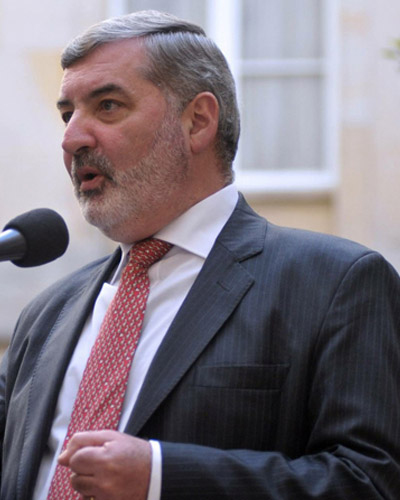
Lord Alderdice, John
Former Speaker of the Northern Ireland Parliament and Senior Fellow at Harris Manchester College of Oxford University
When Kafka writes about the necessity for “a permanent trust in something indestructible within himself” it seems that he is making a psychological observation and saying that everyone needs a dependable, solid core within themselves, though this may not be something of which they are fully aware. At first glance this core self seems similar to the concept of the nuclear self, developed half a century later by Heinz Kohut, the father of Self Psychology. When this nuclear self is made vulnerable to fragmentation as a result of trauma, the experience can be so terrifying that the nuclear self must be psychologically defended at all costs – it cannot be allowed to be destroyed. However, as Kohut not only reflected on himself, but worked constantly with the thoughts and feelings of his patients, he saw that this central cohesive core was not immutable. It developed, and elements and experiences that were once marginal could become more central. This evolving in-depth experience of our body and mind forming a unit in space and a continuum in time is however moulded not only by experiences but in relationship with others. Kafka’s conception seems to have been more focussed on the dangers to the self which must be protected from existential danger, than on the potential for development by outside engagement. I wonder if the difficulties that he and some other existentialist thinkers seem to have had in sustaining lasting and fulfilling relationships led them to build philosophies that, while advancing our understanding of ourselves as living beings, struggled with the sense of an ultimately meaningless existence. They focussed on conceptions to find meaning, but it is relationships, not concepts, that give meaning to life.
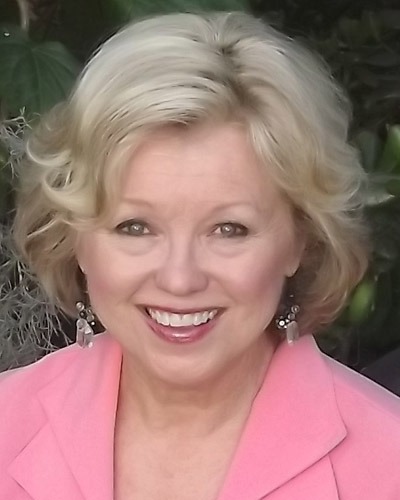
Kathi Diamant
Director, Kafka Project at San Diego State University and Author, "Kafka's Last Love: The Mystery of Dora Diamant"
Franz Kafka referred to the eternal as “The Indestructible,” which he said, “is one: it is the individual human being and at the same time, it is common to all, hence the incomparably indivisible union that exists between human beings.”
More than 100 years after his death, the question has never been more relevant. But as always with Kafka, each question begets new ones, such as what is eternal? Is it God or a religious tradition? Love and human connection? Principles like justice and kindness? The continuity of nature or art?
Kafka’s question does not seek an external eternal, something outside of us, but something within, turning the question inward. Kafka was not religious, but throughout his short life, constantly sought the meaning of human existence, while acknowledging the impossibility of an answer during one’s lifetime. As Kafka wrote, “The meaning of life is that it ends.” Whether one finds a permanent belief in God, love, art, truth, or something else, the search itself becomes part of what it means to be human. It is up to each individual to ask within themselves what makes their life meaningful or worthwhile, and whether they can live without it.
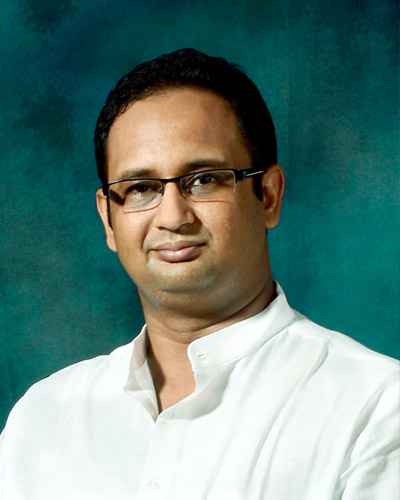
Dr Chinmay Pandya
Pro Vice Chancellor of Dev Sanskriti Vishwavidyalaya University
Freedom: A Responsibility, Not Just a Right
A person may survive without a permanent belief in something eternal within themselves, but it may prove to be difficult to truly flourish. Human beings tend to seek meaning that transcends the finite, the temporary. When life is reduced only to what is immediate and material, purpose often becomes fragile, especially in times of suffering, uncertainty, or change.
The Vedic tradition offers a profound response to this question. The Bhagavad Gita (2.20) declares: "The Self is never born, nor does it die. Having once been, it never ceases to be." This eternal Self (Ātman) is not defined by the changing body, emotions, or circumstances, but is the unchanging essence of our existence. The Chandogya Upanishad expresses this truth through the celebrated mahāvākya, Tat Tvam Asi—"Thou Art That"—affirming that the eternal is not something distant to be discovered, but a reality already present within us. I believe that our hunt for perfection comes from a deep instinct to discover an eternal and timeless truth along with a desire to manifest the fullness of our hidden possibilities because deep down we all seem to long for an eternal freedom. Without reaching a higher consciousness, life continues to give us a feeling of imperfection and incompletion. Without knowing who I really am and what my aim in this vast existence is, everything that I do appears to be unfulfilling and futile.
The belief in the eternal is therefore not merely a theological proposition; it is a transformative way of living. It cultivates resilience in adversity, humility in success, compassion in strife, and responsibility for future generations. Pujya Gurudev, Founder of All World Gayatri Pariwar called this transformative way of living as the ascent of divinity in men.
In today's age of artificial intelligence and unprecedented technological progress, Kafka's question is more relevant than ever. The challenge is not simply whether machines may one day appear more human, but whether humans will remain rooted in the timeless values that define our humanity. A civilization that forgets the eternal within risks losing its moral compass. A civilization that remembers it can ensure that innovation serves wisdom, compassion, and the common good.
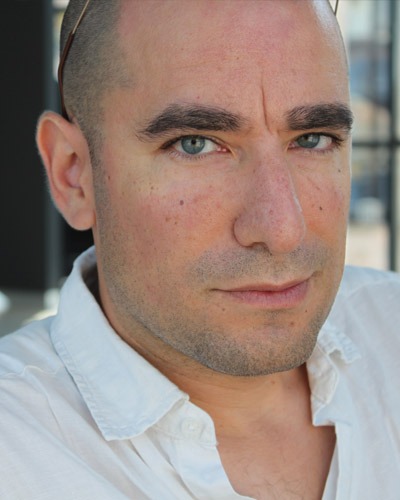
Dr Benjamin Balint
Author of Kafka's Last Trial
Franz Kafka’s question cuts more sharply in an age that swings between fanatic certainty and spiritual numbness. A person can, of course, continue biologically without belief in anything eternal within himself; whole systems now train us for that reduced survival, offering utility, outrage, and technical command as our daily bread. Yet life so narrowed loses the inward court before which it must answer.
Kafka calls us back to something indestructible, though concealed even from the one who carries it. His stories give us messages that never arrive, hunger without fitting food, an inheritance grown thin in transmission yet somehow still alive. In Kafka, tradition often seems broken, almost inaccessible; still, it leaves its pressure on the soul.
The eternal is never possession. It is the stubborn remainder within the unfinished creature, the trace left by an absent God, the hidden light by which we remain answerable. Without it we may go on living; with it we are summoned.
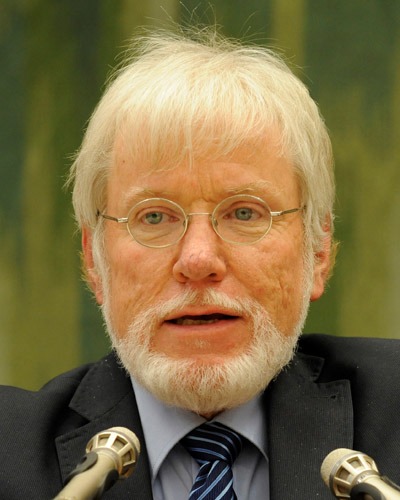
Christoph Stueckelberger
Professor Emiritus of Ethics at University of Basel, Switzerland and Founder and Honorary President of Globethics Foundation
My short response: yes, a person can. The question is rather what is the added value if a person believes in a divine power beyond humans (within themselves? The divine always goes beyond the human, be it within and outside of a human brain/soul/consciousness) . The ethically, mentally, politically, economically, socially very important reason: God, a divine, the absolute, as in all religions, prevent humans to set themselves absolute. Humans are creation, not the creator. They are creative and are encouraged to be, but can never be the origin of creation and absolute salvation. It means: faith is/should be a wall against all kind of human absolutism, dictatorship and promotes modesty, responsibility, reliability etc.