
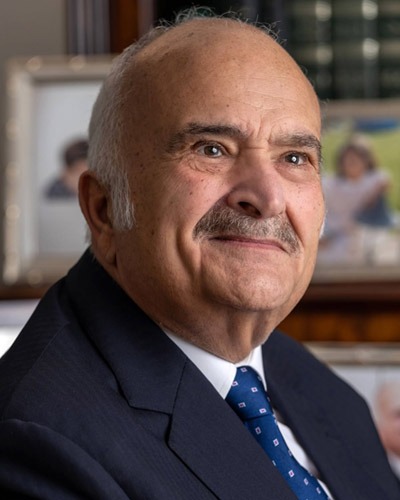
HRH Prince Hassan bin Talal of Jordan
The modern age has upended Ibn Khaldūn’s cyclical framework of history. He argued that the decay of ‘asabiyyah’ (social cohesion) under material affluence serves as the primary catalyst for civilizational downfall, paving the way for external nomadic conquest.
Today, however, threats like climate change and nuclear weapons are global and ecological, rather than localized human rivalries. Furthermore, globalization has eliminated the isolated, high-cohesion groups required to restart his cycle, trapping history in a monolithic planetary matrix.
Despite this systemic disruption, Ibn Khaldūn’s core concept remains an urgent prescription. The contemporary Arab world can escape fragmentation and institutional stagnation by transforming ‘asabiyyah’ from an exclusive tribal bond into an inclusive, civic national cohesion. By anchoring solidarity in transparent institutions, the rule of law, and human dignity, the modern state can consciously cultivate the resilience needed to survive both regional fracturing and global alienation.

HRH Prince Turki Al Faisal
Chairman of King Faisal Centre for Research and Islamic Studies, Saudi Arabia
Ibn Khaldun with many others thought along the lines of flux and reflux, order and disorder of societies. Such insights may still apply within frontiers however loosely conceived, yet I doubt they apply to humanity writ large. I may go far and claim that the shared fate of humanity was not comprehended by Ibn Khaldun or any other philosopher or historian before the 20th century. This is not only because of the intense integration, or collapse of distance, but also because of the nature of both the risks we face and the opportunities presented to us. Nuclear weapons, climate change, pandemics, and the emerging fears from rogue AIs are not selective. Likewise knowledge, science, technology, medicine, food and water technologies - despite unfair distribution and benefit - present all of humanity unimaginable opportunities to flourish. From the perspective of humanity, there is no center/periphery, no renewal of one group and decline of another, no barbarians coming to replace us. There is only shared destiny where we all rise together or fall together, and when there is no outsider left to inherit, we have no option but to strive for mutual renewal.
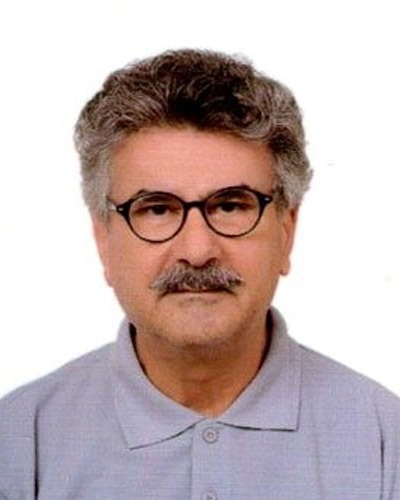
Khaled Kchir
Professor at the University of Tunis
My first remark concerns the context, because Ibn Khaldun observed and studied pre-industrial tribal and/or "imperial" societies. Relations from antiquity to modern times were governed by direct exploitation and commercial profits. Secondly, this configuration, summarized briefly, is no longer ours, since the advent of colonization (1492), colonial expansion and the clashes between the Spanish and Ottoman empires.
Thirdly, the control of the American, African, Australian and Asian continents by colonial powers changed the game with the birth of new socio-eco-political dynamics from which social classes emerged throughout the world, whose SOLIDARITY was based on common INTERESTS.
Fourth observation: With this new configuration, "classical" colonization encompassed the entire globe! As classical capitalism continued to advance, it gave rise to imperialism, which is nothing other than the domination of the world's resources for the benefit of increasingly smaller minorities. The corollary of this evolution was none other than the arms industry, designed to maintain "perpetual domination" with the trappings of "independent" states, all part of a steamroller of productive forces in both dominant and dominated countries.
5th Remark, this configuration explains well the two imperialist wars, called "world wars", the wars in Vietnam, in the Middle East and the "legalized-justified-defended" occupation of Palestine. This is my modest answer inspired by the study of Khaldunian texts and the unbearable reality in Gaza.
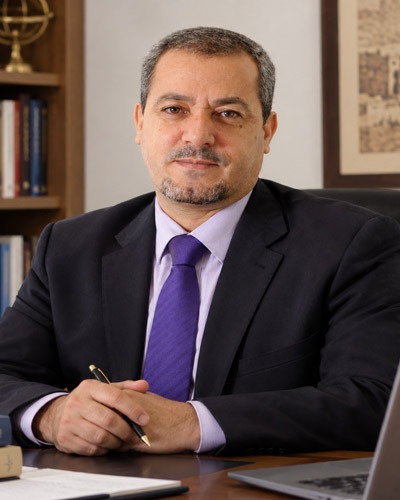
Prof. Dr. Badrane Benlahcene
Research Professor of Philosophy & Civilization Studies, Director of Ibn Khaldon Center for Humanities and Social Sciences, Qatar University
My answer to the question is that Ibn Khaldun would probably say that the rise and decline of societies is a recurring pattern rooted in social cohesion (ʿasabiyyah). Societies rise when they possess a strong sense of shared purpose, collective responsibility, and moral commitment. They flourish when that cohesion is translated into effective institutions, economic vitality, and political order. But as prosperity increases, solidarity can weaken, giving way to complacency, division, and excessive attachment to luxury.
Would this cycle still apply today? I believe Ibn Khaldun would answer: yes, but in a modified form. Modern societies are more complex and interconnected than the dynasties of his time, yet they still depend on social trust, legitimacy, and common purpose. The real challenge of our age is that our greatest threats, such as climate change, pandemics, and nuclear weapons, are global. They require forms of solidarity that go beyond tribe, nation, or state.
So the lesson of Ibn Khaldun is not that collapse is inevitable, but that no civilization can endure on technology, wealth, or military power alone. The future will depend on whether societies can renew the social and moral bonds that enable collective action. In that sense, the rise and decline of civilizations remains a living reality, even in the twenty-first century.
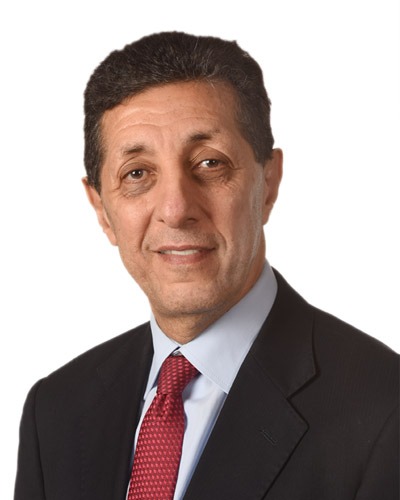
Ambassador Hesham Youssef
Former Assistant Secretary-General for Humanitarian Affairs at the Organisation of Islamic Cooperation (OIC)
This is one of the fundamental questions that we can contemplate about human progress as it is not simply about the past, it is also about the choices that societies make today that affect their future.
Civilizations do not rise and fall according to a single historical pattern. Economic resources, political and military power, geography, human resources, and technology matter. However, none of these factors on its own explains why some societies flourish while others weaken or disappear even if they possess considerable wealth and power.
The underlying dynamic, in my view, is the capacity of a society to manage change, and establish an environment where people can innovate and be the best that they can be. The interplay of several factors is crucial.
First, the quality of institutions and governance. Societies flourish when they develop institutions that can maintain a degree of justice, manage resources equitably, and respond to people's needs. However, if institutions become rigid, corrupt, or lose their legitimacy, the gap between those who govern and the people widens, and society weakens.
Second, civilizations advance when they encourage inquiry, education, innovation, and the exchange of ideas, including with their neighbors and beyond. They become vulnerable when elites begin to believe that the existing order is perfect the way it is.
Third, there are always competing interests, identities, beliefs, and visions of the future in any society. The question is how they are managed. A society that cannot accommodate and manage disagreement through legitimate institutions and peaceful dialogue will transform these differences into a source of exclusion, polarization, and violence. As a diplomat that worked on peace-building for decades, it is particularly critical for societies to manage conflict in a constructive manner. It is not merely a mechanism for preventing violence, it is an essential part of its capacity to survive, develop and prosper.
Fourth, the relationship between a society and the rest of the world is also critical. No civilization develops in isolation. Trade, migration, cultural exchange, competition, and war have all influenced the trajectories of societies throughout history. Some civilizations have prospered by learning from others and adapting external knowledge to their own circumstances. Others have suffered when they overextended themselves, became trapped in destructive rivalries, with a cost that led to their decline or even demise.
Fifth, every society encounters crises. A crisis does not necessarily lead to decline. It can also become an opportunity for renewal. What matters is whether a society can learn from its failures, distribute the costs of change fairly, and generate sufficient public trust to undertake difficult reforms.
Is there, then, an underlying dynamic that explains civilizational change? Civilizations do not necessarily decline because they become weak, sometimes they become weak because they lose the ability to recognize and correct the sources of their vulnerability.
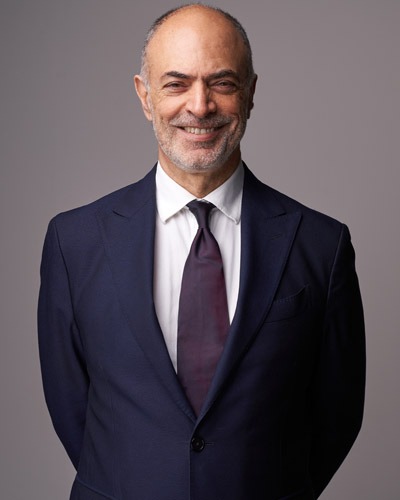
John Bell
Director of Conciliators Guild and author of How to Tame the Political Animal: The Missing Piece
Ibn Khaldun’s idea is that prosperous, sedentary societies inevitably collapse or are overrun by keener, hungrier groups. This cycle has been confirmed by John Bagott Glubb in Fate of Empires and Tod Bucholz in The Price of Prosperity. Wealth and success lead to decadence, overshoot and decline. It is difficult to believe that this ‘law’ can be overturned as it reflects some basic aspects of human nature, including that need drives us to innovate and succeed. However, global integration today raises two new questions: Given interconnectivity, will the decline of, for example, the USA, trigger war, as it reasserts, or cause global chaos due to the fragility of the new interconnected system? Second, will AI permit a more totalitarian control that overrides the cycles of the past and permit state authorities to control in ways hitherto unseen? Neither scenario is appealing and begs another question: Can we develop new outlooks on managing tribal rivalries, rise and decline, to permit more organic kaleidoscopic relations between nations? Because we appear at our best when times are worst, this is possible. The key will be a shift in our understanding of having an ethnic identity and a more universal understanding or ourselves – a shift different than today’s.