
The Normandy Manifesto
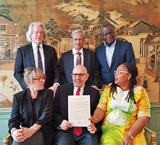
The Normandy Manifesto for World Peace was issued on 4 June 2019. Its authors included four Nobel Peace Prize laureates: Mohamed ElBaradei, Leymah Gbowee, Denis Mukwege, and Jody Williams and Anthony Grayling, eminent philosopher, and Sundeep Waslekar, President of SFG.
Above all, the manifesto highlights the urgent need for global peace. Conflict and violence continue to threaten communities around the world. Therefore, the authors call on individuals, governments, and international leaders to make peace a shared priority.
Key Messages of the Normandy Manifesto
- War Is a Choice
The manifesto argues that war is not inevitable. Instead, leaders make a conscious choice to begin or continue armed conflict. For this reason, they can also choose diplomacy, cooperation, and peace. However, lasting change requires collective action. Governments, organizations, and citizens must work together to prevent violence and resolve disputes peacefully.
- A Global Call to Action
The Normandy Manifesto calls on both individuals and leaders to take meaningful action. In particular, it emphasizes that everyone has a role in building long-lasting peace. Political leaders have a responsibility to prevent conflict. At the same time, citizens can promote dialogue, tolerance, and cooperation within their communities. As a result, peace becomes a shared responsibility rather than a distant ideal.
- Inspiration From the Russell-Einstein Manifesto
The Normandy Manifesto draws inspiration from the Russell-Einstein Manifesto of 1955. That historic declaration warned about the dangers of nuclear weapons. It also encouraged countries to resolve international disputes through peaceful means.
Today, those concerns remain highly relevant. Nuclear threats still exist, while new geopolitical tensions and emerging technologies create additional risks. Therefore, the need for peaceful cooperation is as urgent as ever.
Why the Normandy Manifesto Matters
The Normandy Manifesto serves as a rallying point for peace advocates worldwide. Furthermore, it supports broader efforts to address global security challenges.
These challenges include nuclear risks, armed conflict, and the possible misuse of emerging technologies. By focusing attention on these threats, the manifesto encourages governments and international organizations to seek peaceful solutions.
Ultimately, the Normandy Manifesto delivers a clear message: humanity can choose peace over war. However, achieving lasting peace requires awareness, responsibility, and action from everyone.